The Stories Behind Old Japan
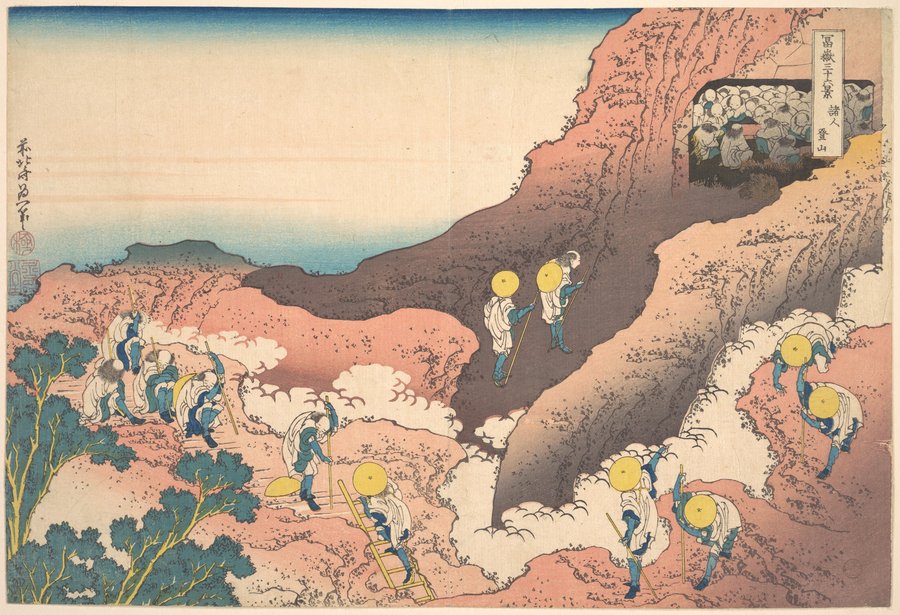
諸人登山Morobito tozan
The Mount Fuji Print with No Mount Fuji in It
Hokusai's "Groups of Mountain Climbers" and the People of Edo Who Climbed the Mountain
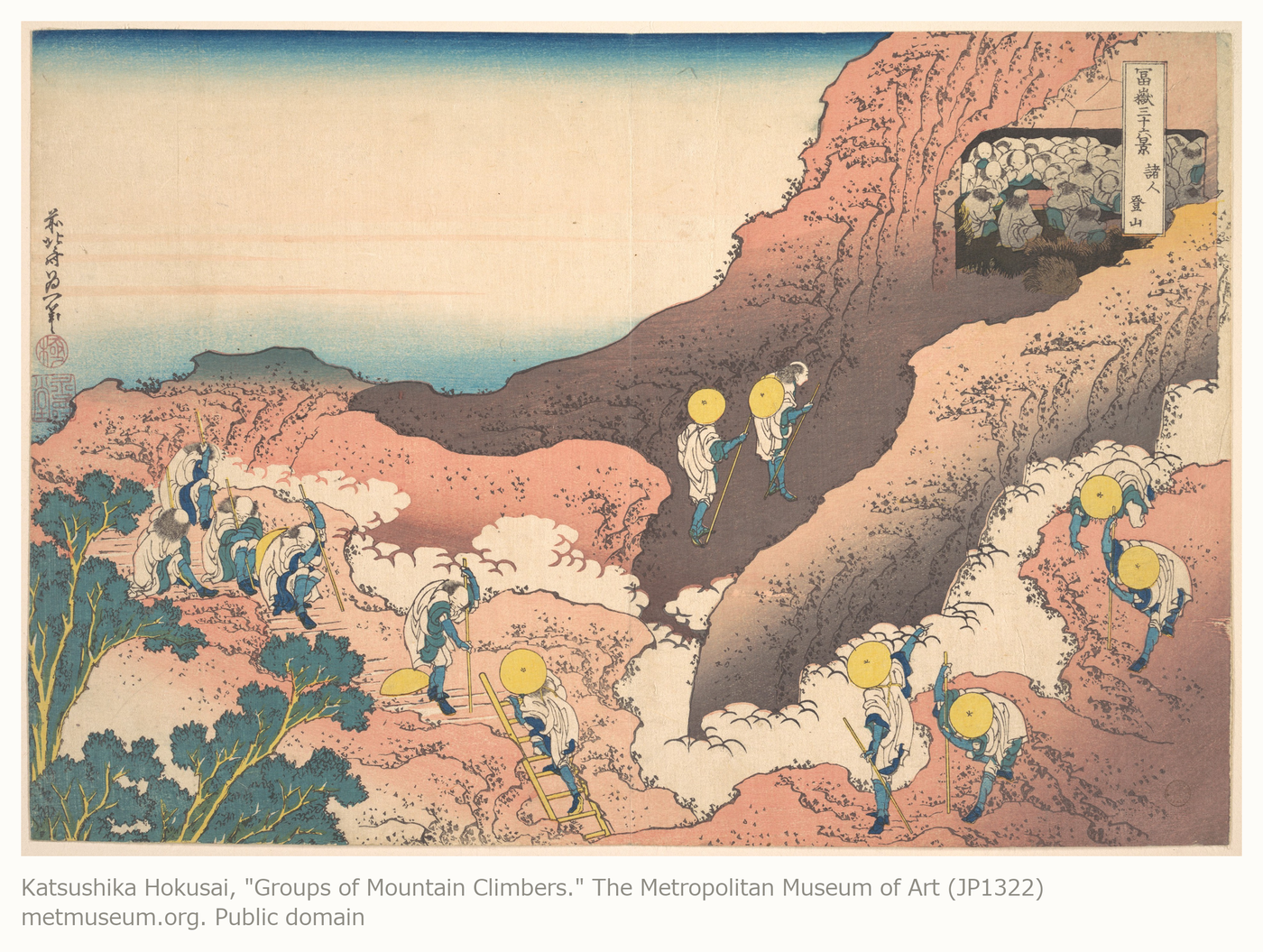
In Hokusai's series of prints of Mount Fuji, one print does not show the mountain, because the people in it are standing on the summit. They were townspeople of Edo who worshipped the mountain, and their story leads to small Mount Fujis built inside the city.
Morning on the summit
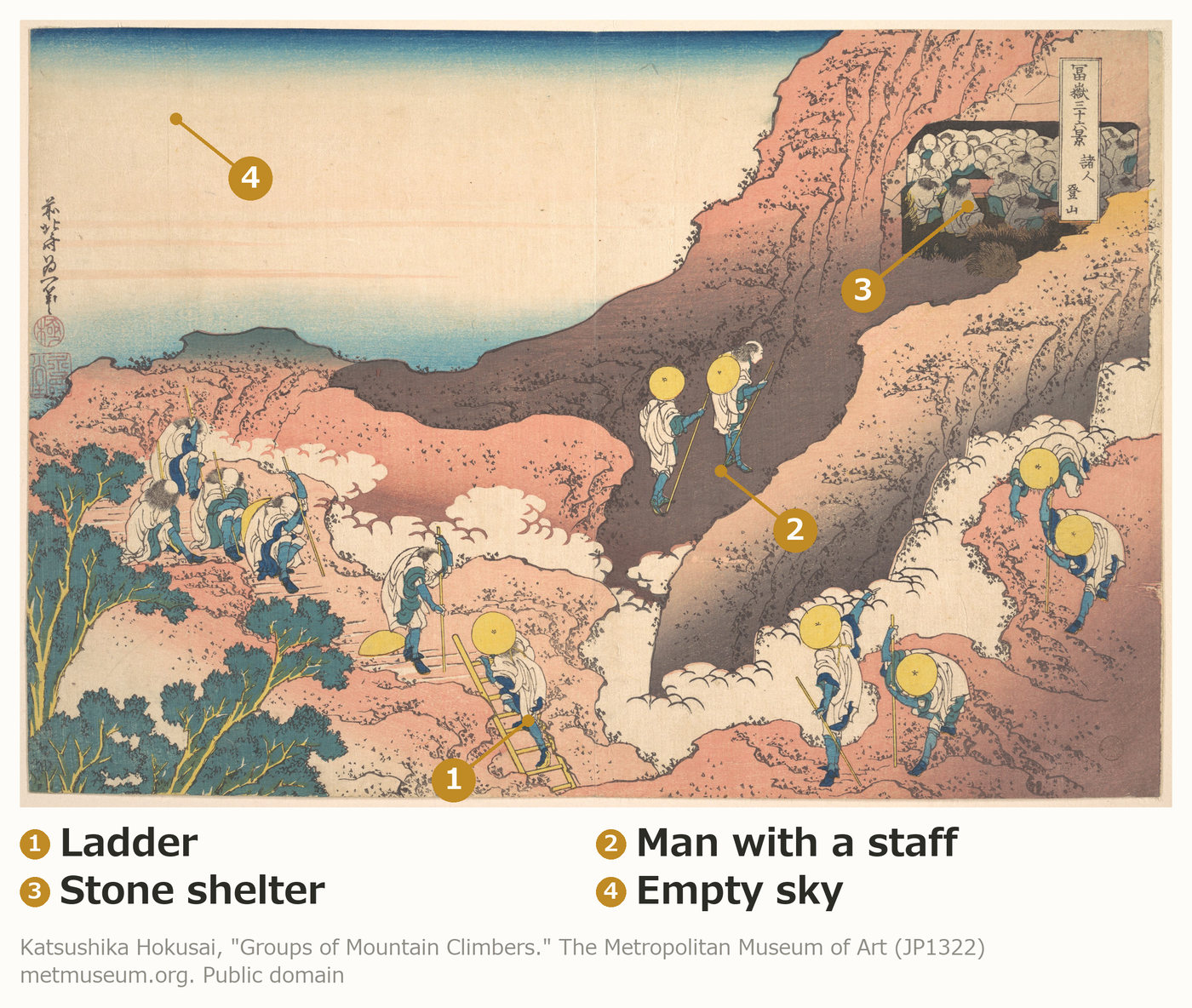
Read from the bottom up, the print shows people climbing a ladder and the rocks near the summit, while others crowd into a stone shelter. The empty sky, with a faint tinge of red, suggests the hour just before sunrise.
The people in white
The people in white robes worshipped Mount Fuji as a god. On the summit they walked around the crater and waited to pray to the rising sun, and a group like this was called a Fuji kō.
The Fuji kō: climbing the mountain together
A Fuji kō was an association of townspeople who joined together to climb the mountain and worship there. It spread through Edo after an ascetic died on the mountain praying for the world, though the books disagree on when the boom came.
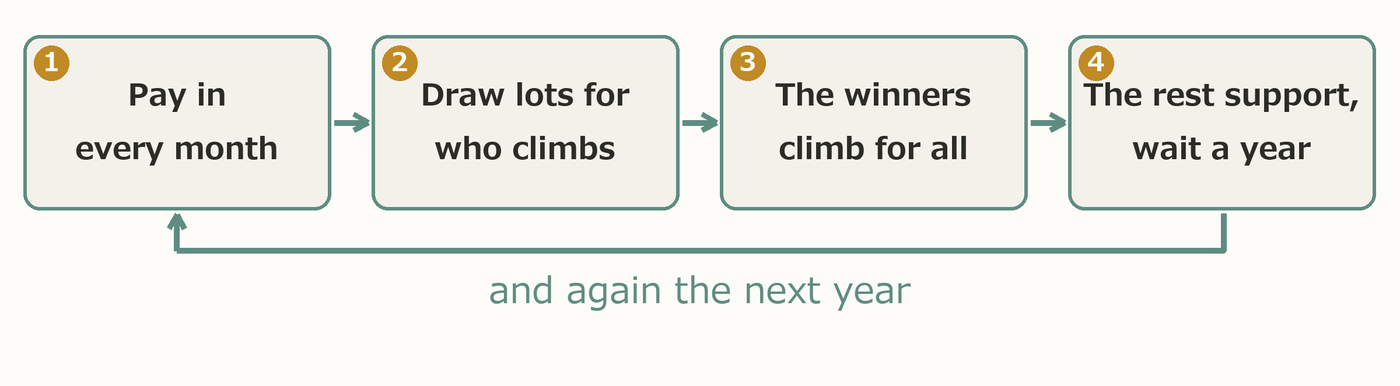
Monthly payments and a lottery
Members paid into a common fund every month, and those chosen by lottery climbed on behalf of everyone, led by a guide who did the work out of devotion. The city banned the kō again and again, yet people kept gathering, even though few of them ever reached the summit.
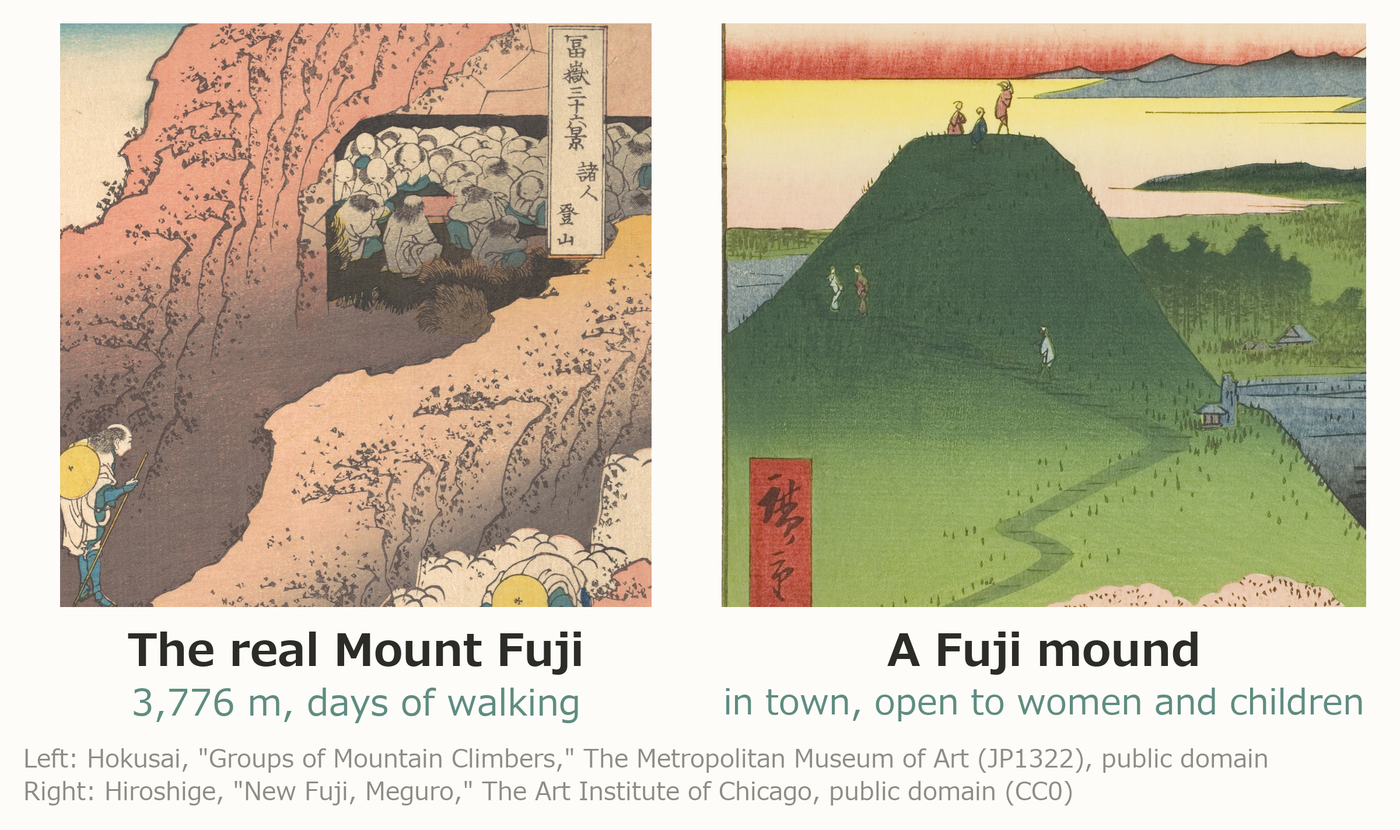
A Fuji for those who could not climb
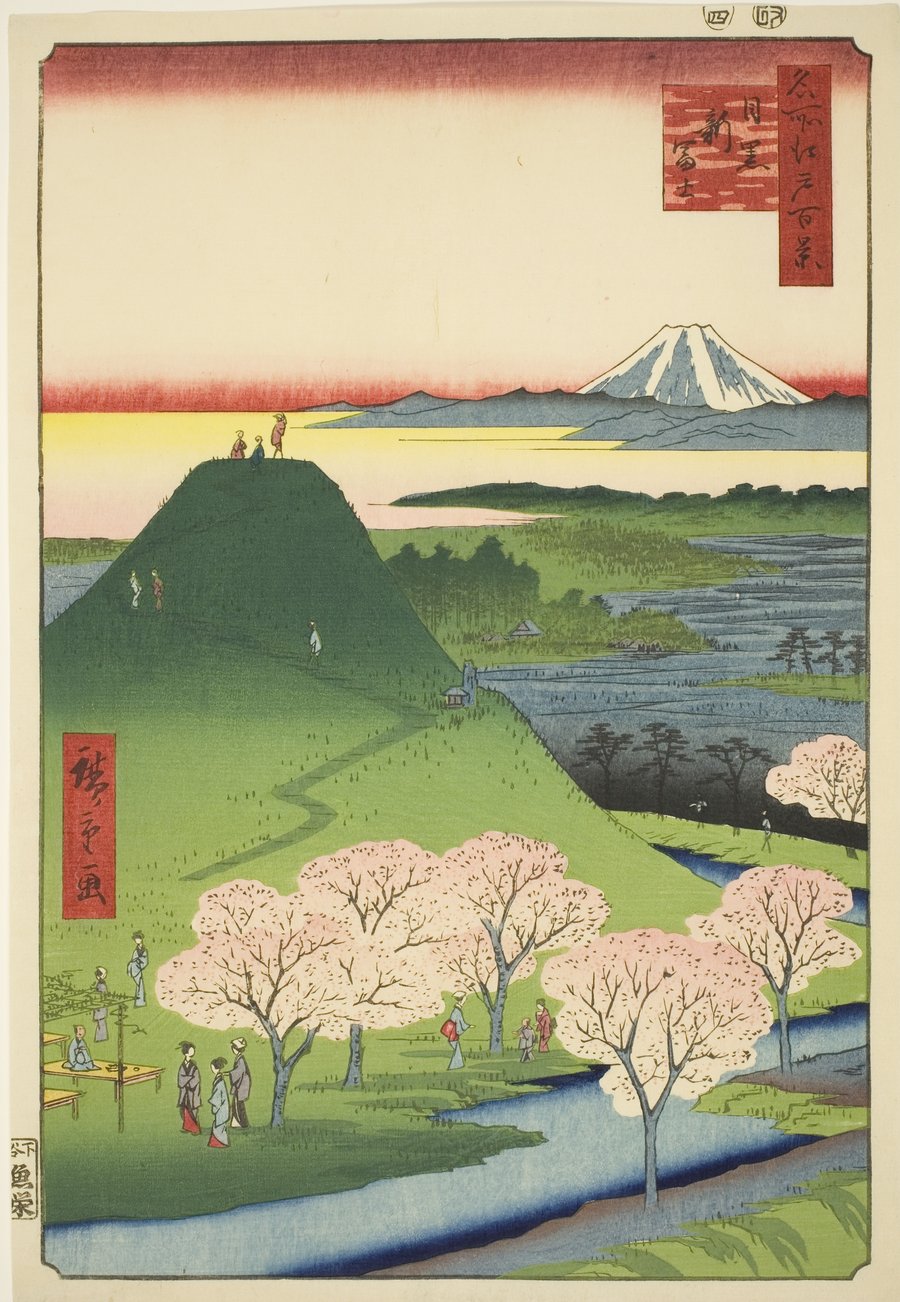
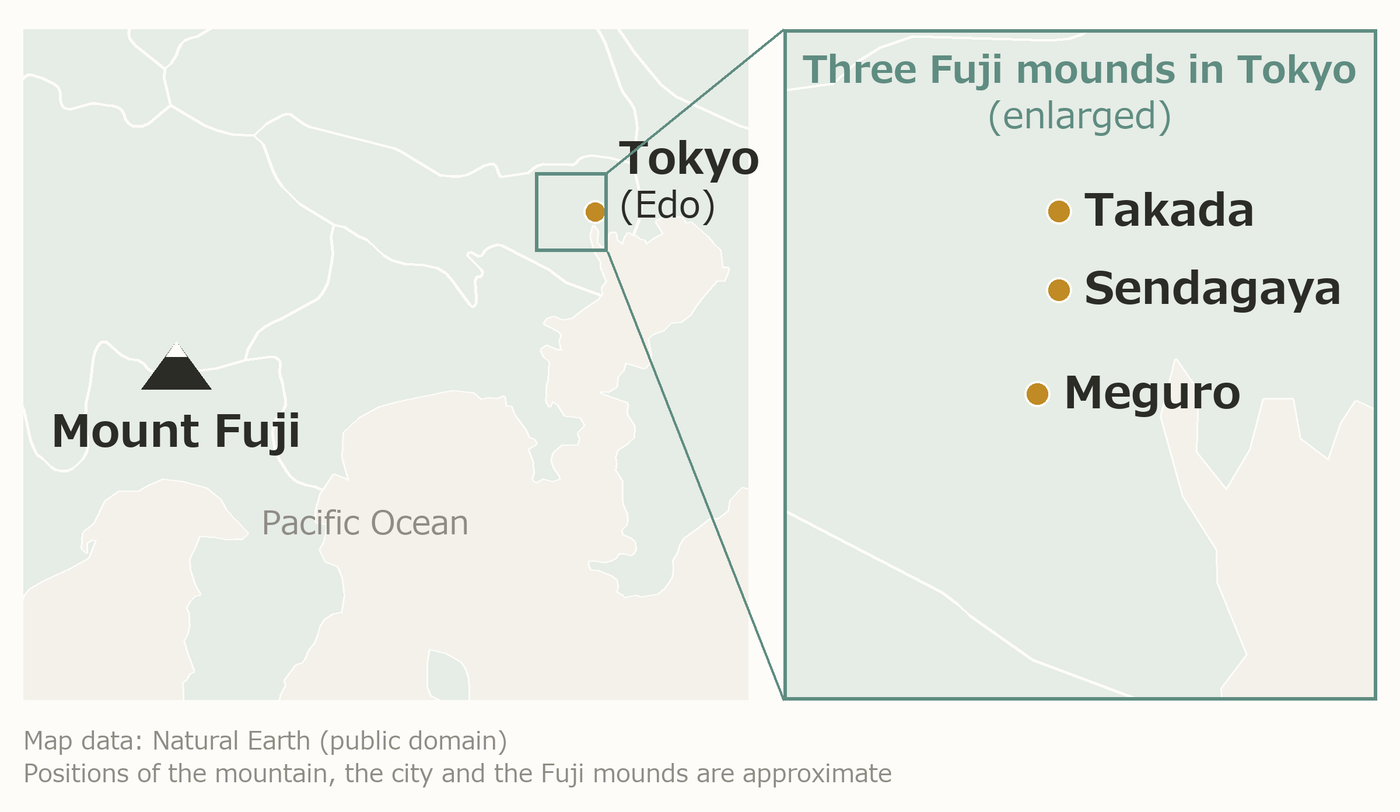
Women were barred from the summit, and the mountain was too far for many others, so a disciple of the ascetic built a small Mount Fuji inside the city. Climbing such a Fuji mound was said to bring the same blessings, and the mounds spread across Edo.
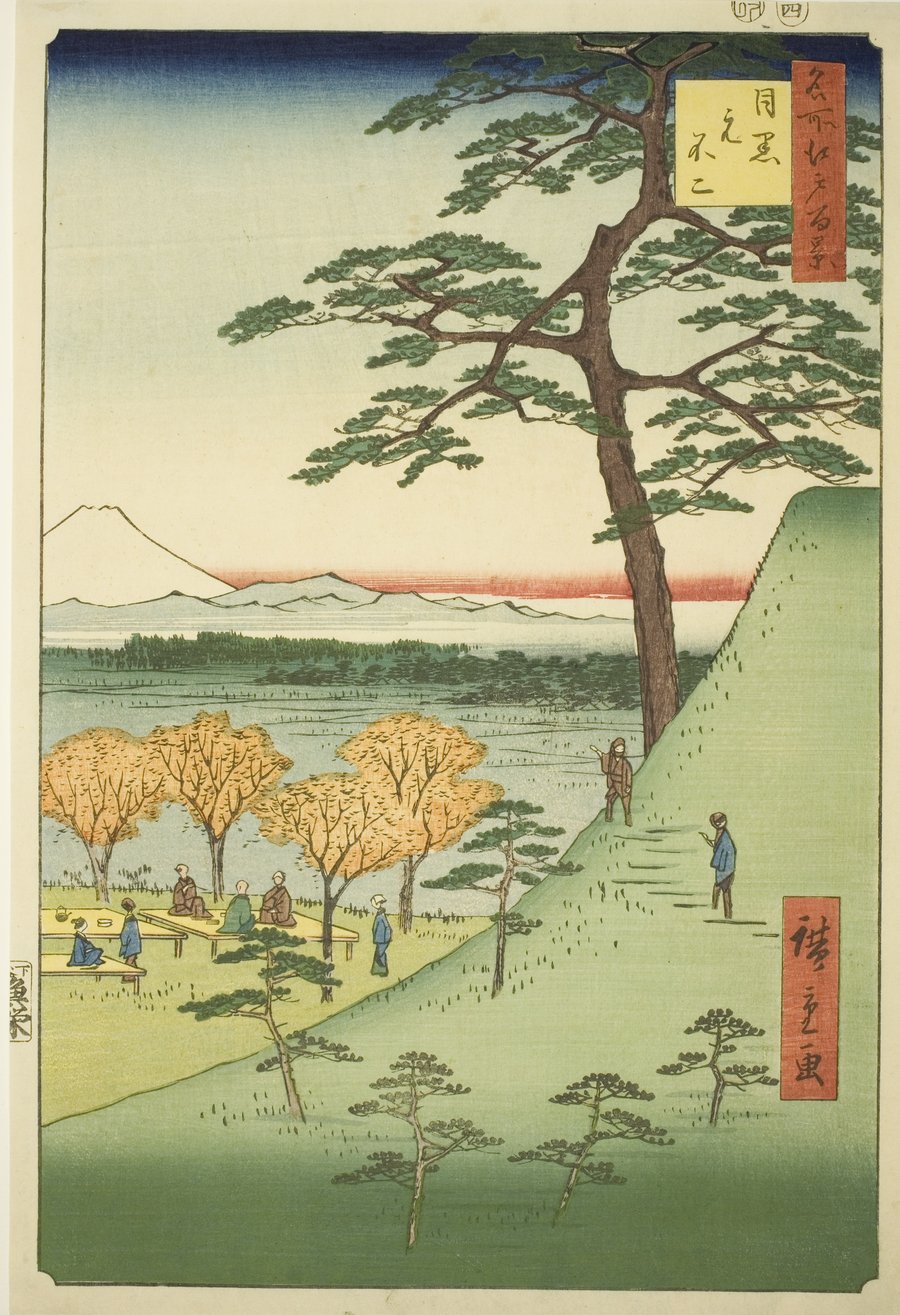
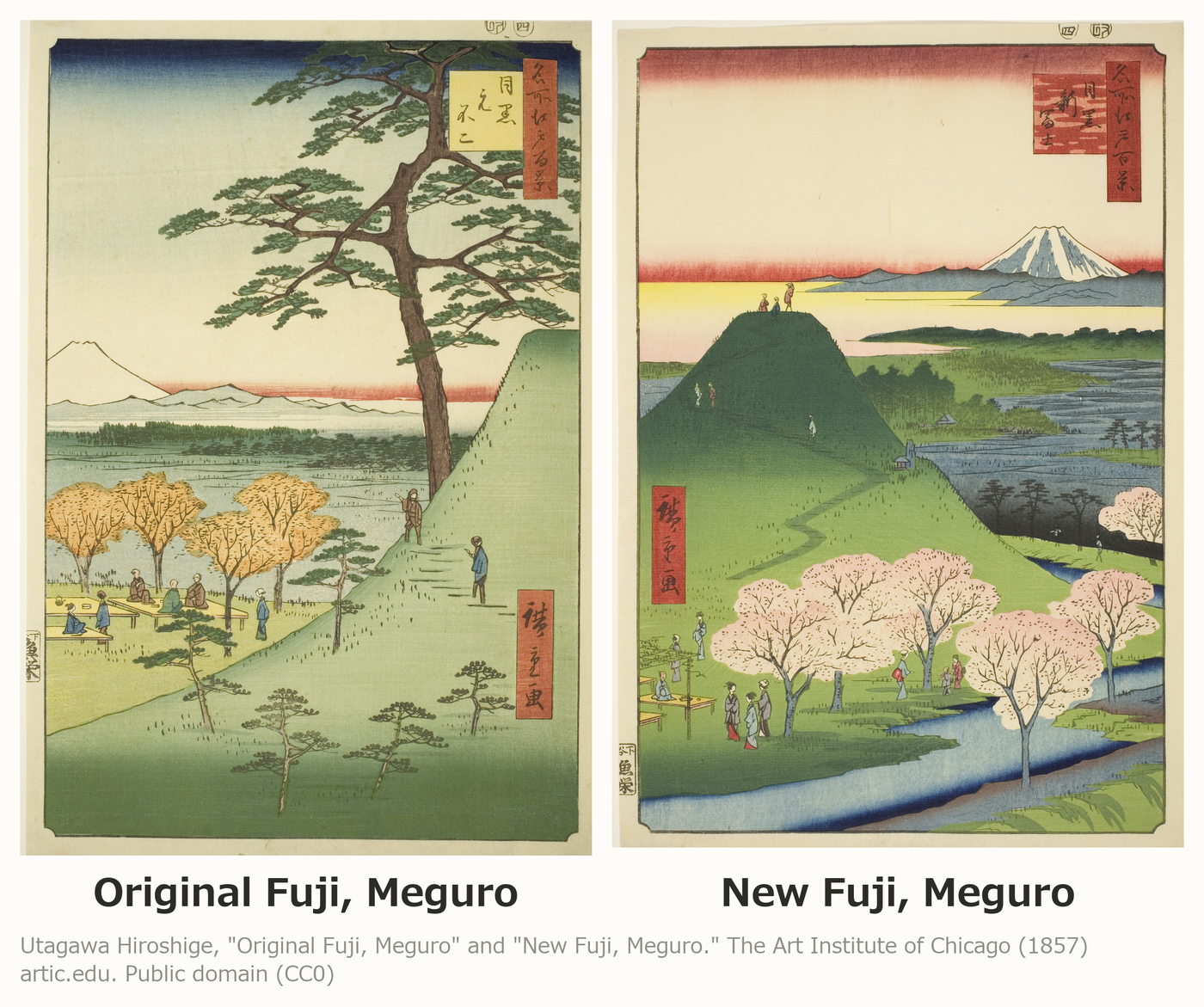
The Fuji in town, as Hiroshige drew it
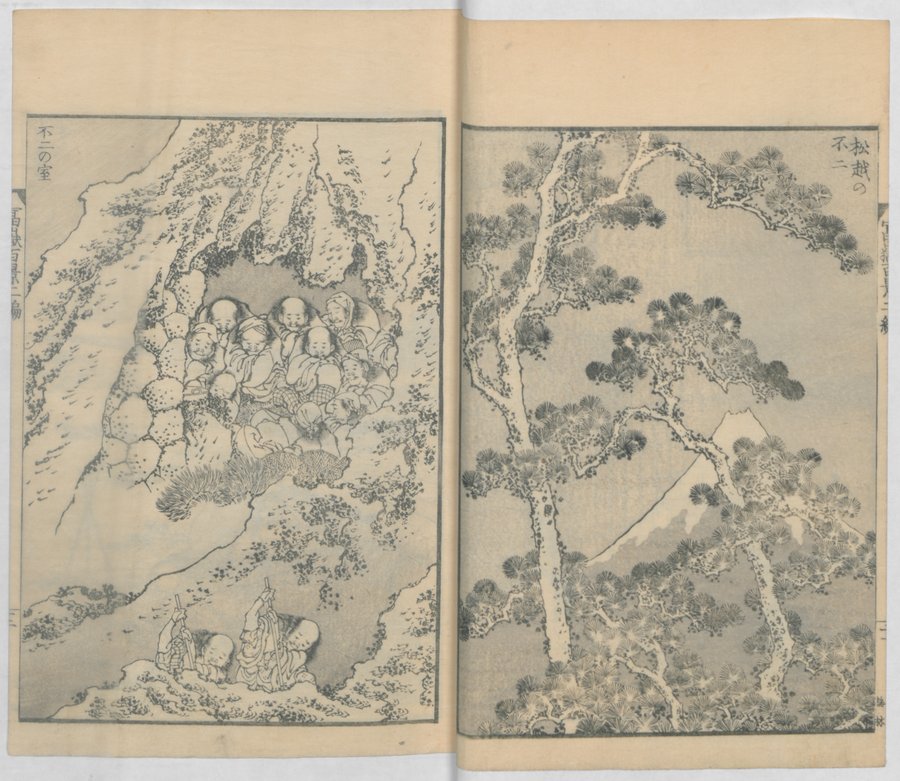
A generation later, Hiroshige drew two Fuji mounds in Meguro, with the mound filling the foreground and the real Fuji small in the distance. Between the two artists' prints, the everyday life of the same worshippers comes into view.
Why did 46 prints of Fuji come out?
The series sold so well that prints were added, and this is one of them. The books agree that the spread of the Fuji kō helped the publisher take the risk, but differ on how much, and none shows a record of a member buying the print.
Did Hokusai climb it?
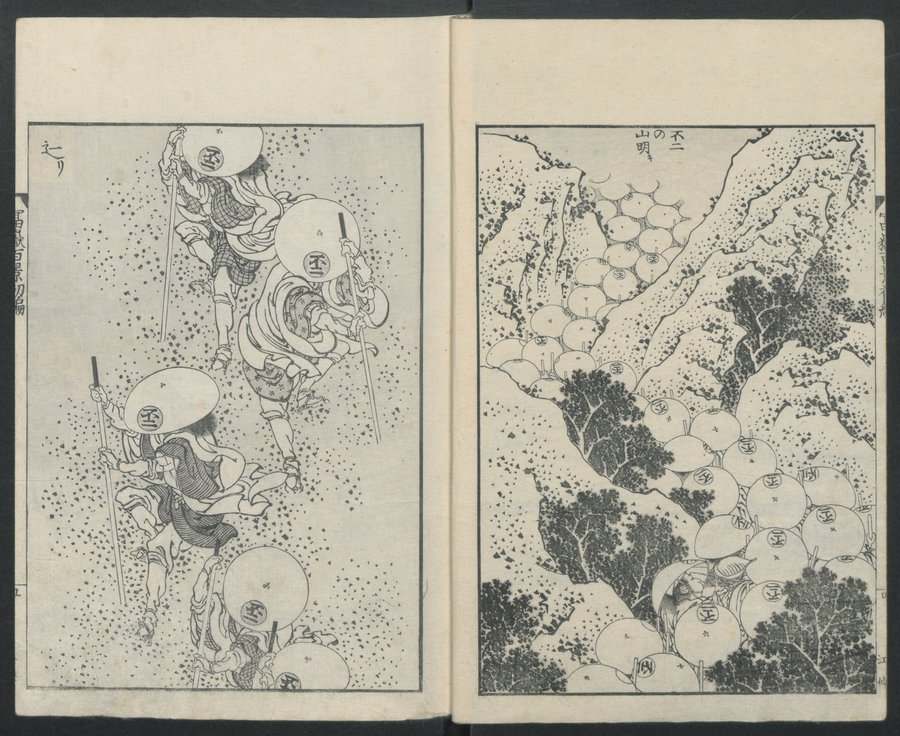
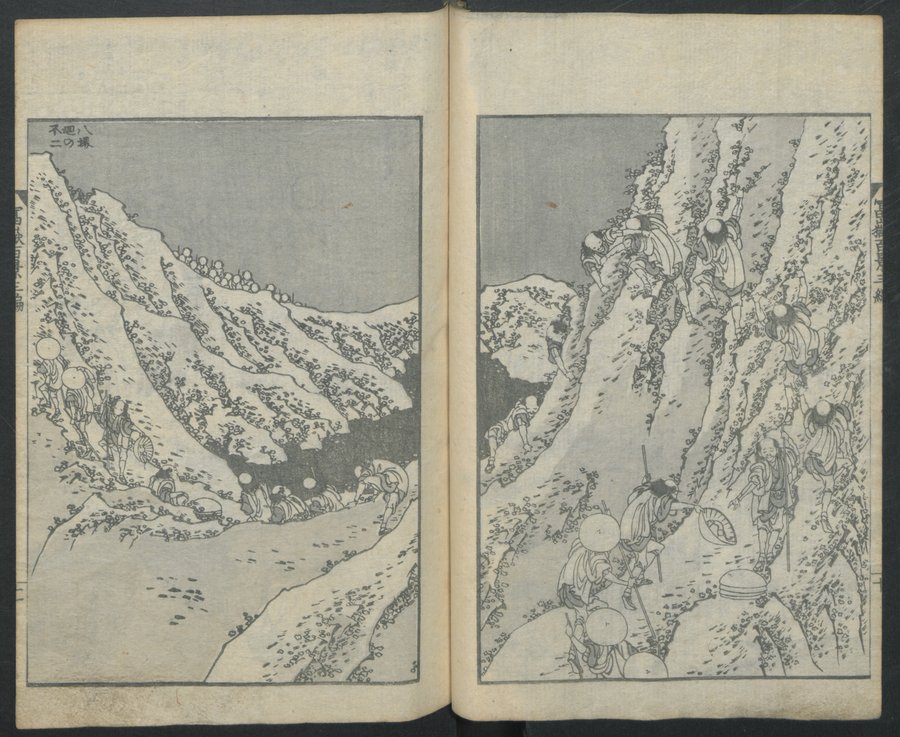
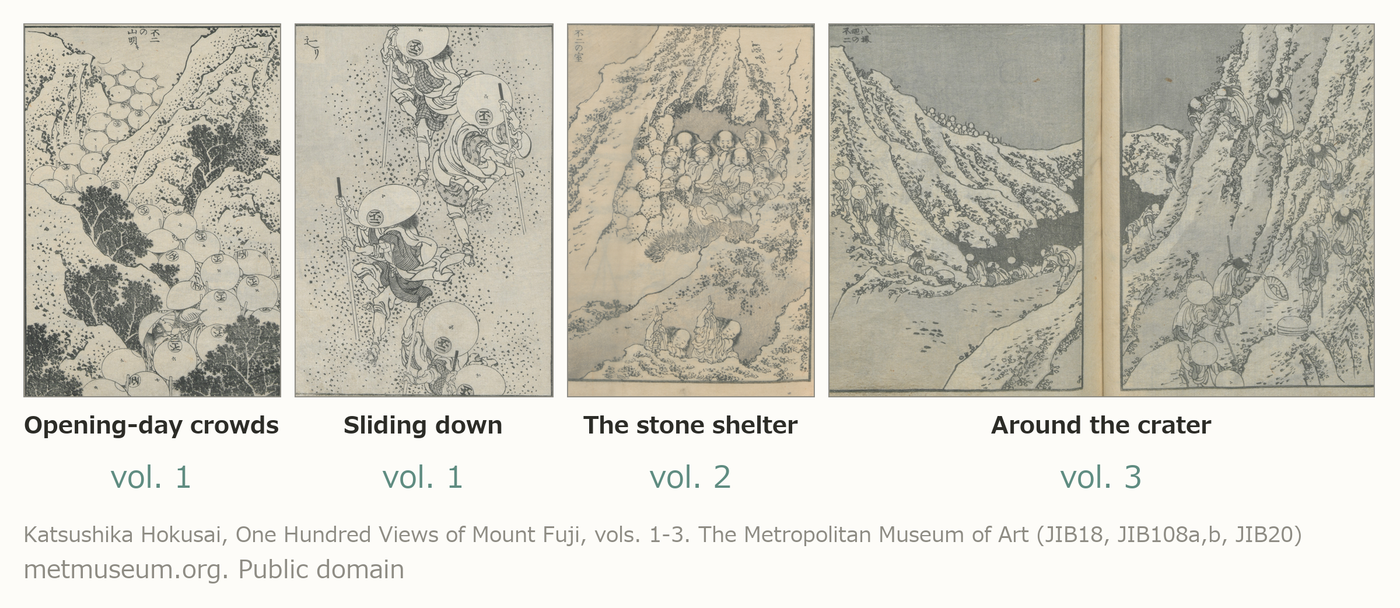
There is no firm evidence that Hokusai climbed Mount Fuji, but he kept drawing the Fuji kō in a later picture book.
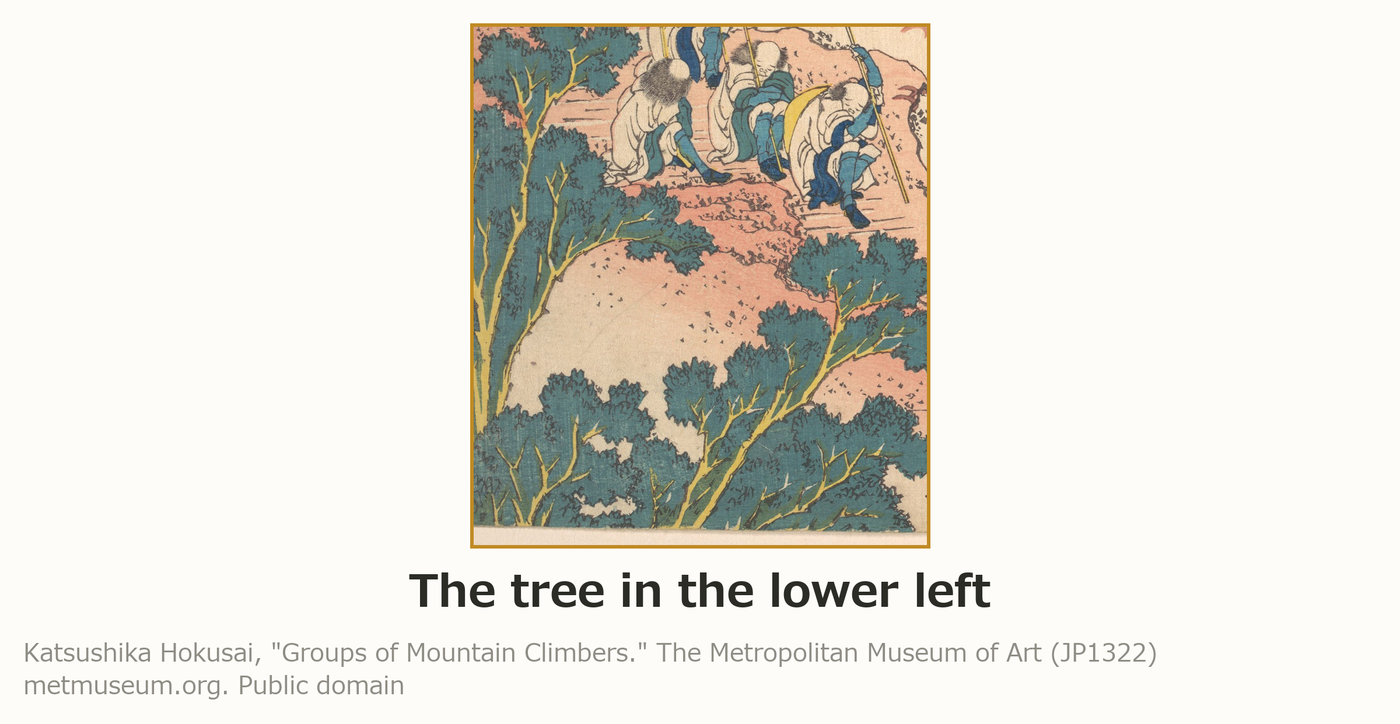
One writer reads a leafy tree in the lower left corner as a sign that the scene is a Fuji mound in town, not the real summit. The other books read it as the summit.
Fuji mounds you can climb still stand in Tokyo today. On the real summit and on a mound in town alike, people were worshipping the same mountain, and the print made me feel how much the meaning of the same climb can change from one age to another.
How I researched this
I set Japanese books side by side, and for how a kō worked I relied on a history of travel. Where the books disagree, on dates, numbers, whether Hokusai climbed, and what the print shows, I left the disagreements side by side.
Prints in this article