The Stories Behind Old Japan
ぼかしBokashi
Shading Not Carved into the Block
In Ukiyo-e, "Bokashi" Is Made by the Printer's Hand
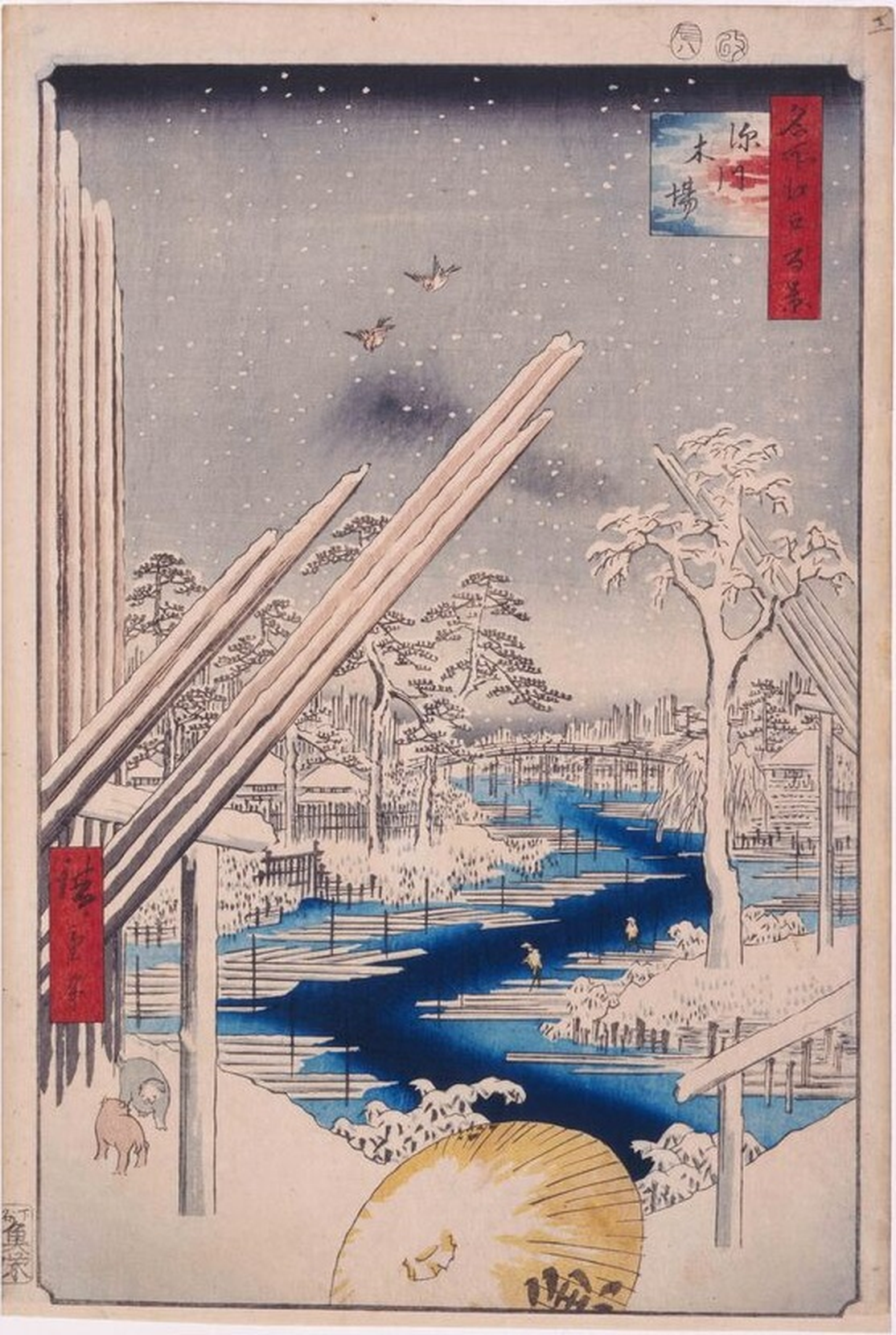
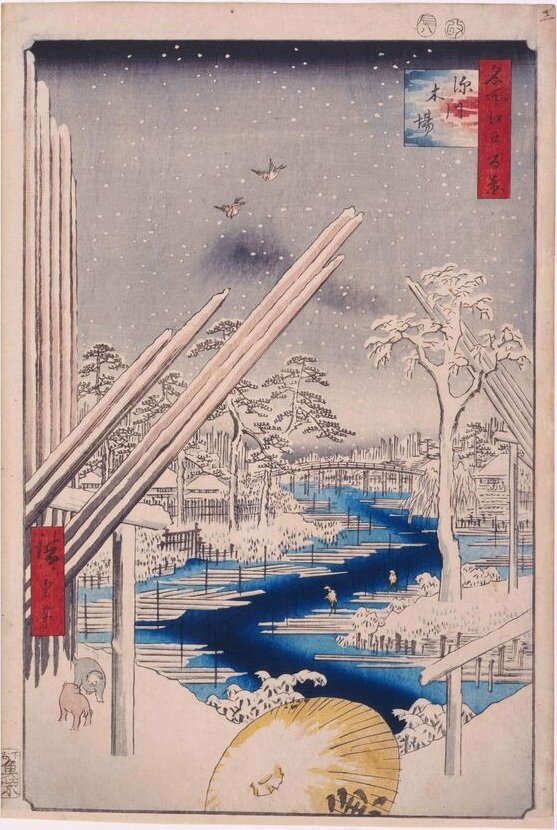
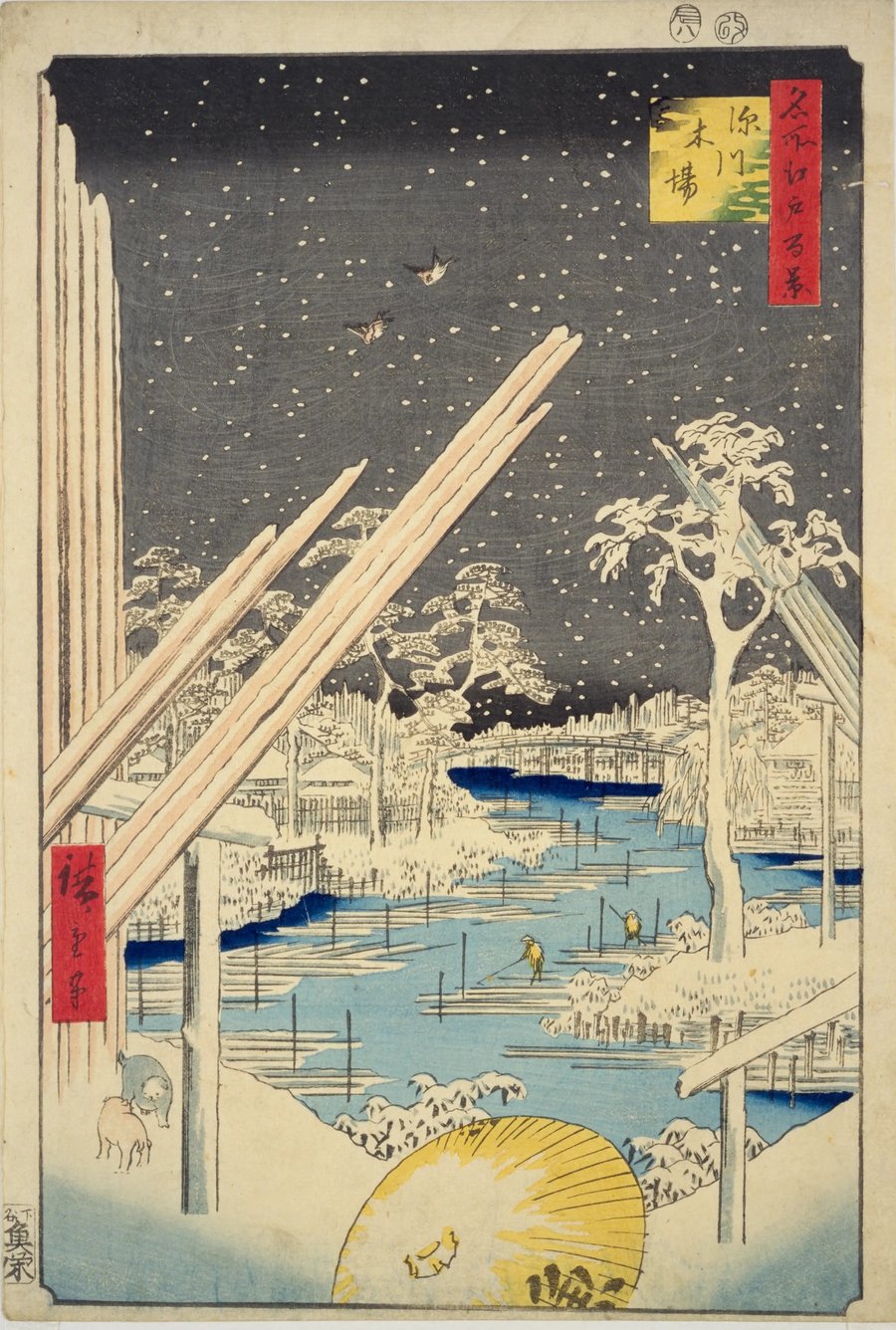
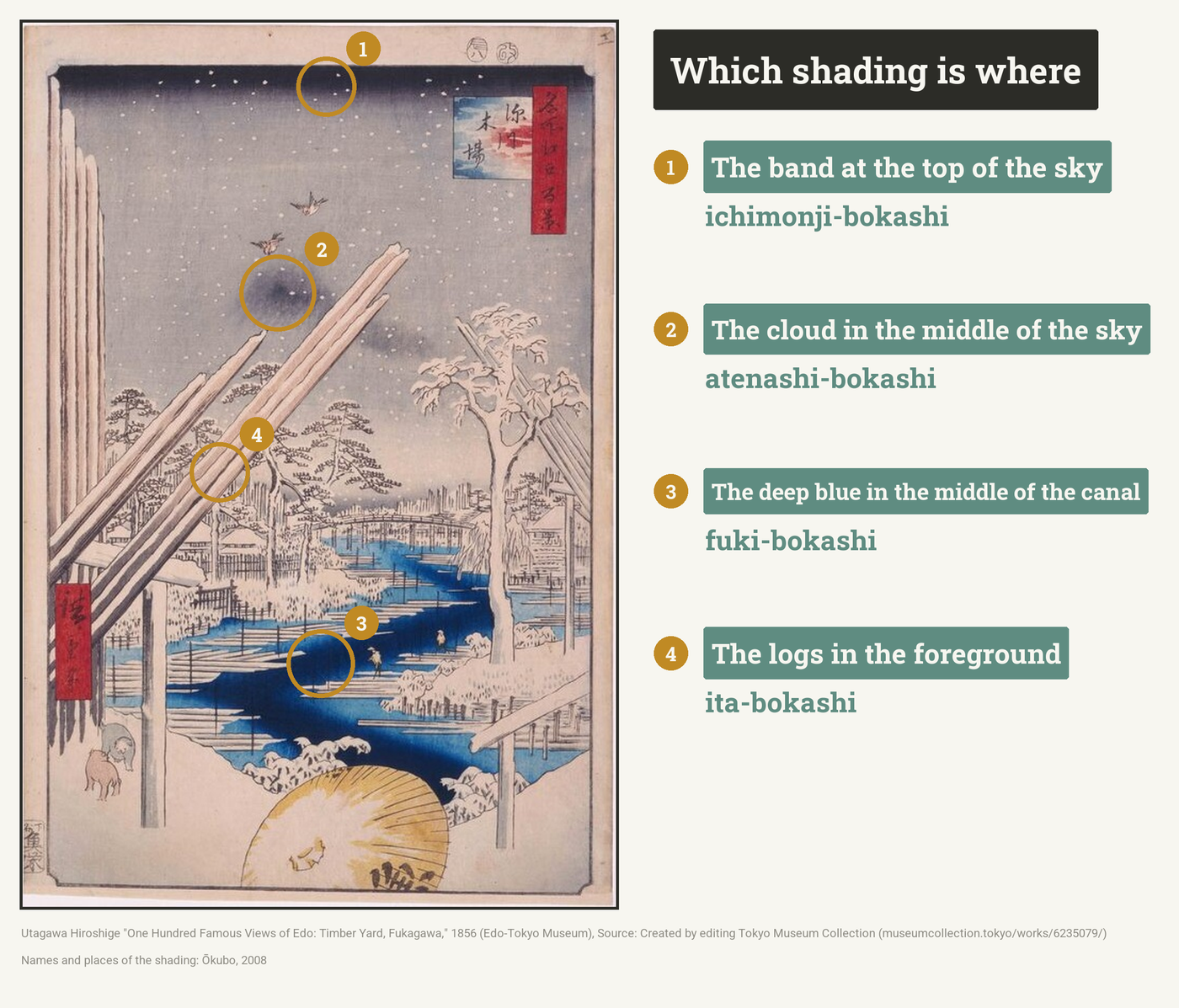
In Utagawa Hiroshige's "Timber Yard, Fukagawa" (1856), only the middle of the canal is a deep blue, growing paler toward the banks. This shift from dark to light, called "bokashi," is not carved into the woodblock: the printer makes it by hand, every time an impression is pulled.
Prints built by layering areas of color struggle with gradation
In a woodblock print, an area of color normally comes out flat, in one even tone, where a brush could give any gradation. Clever ways of carving and printing widened that range, and one of them is bokashi, a smooth shading from deep color to nothing.
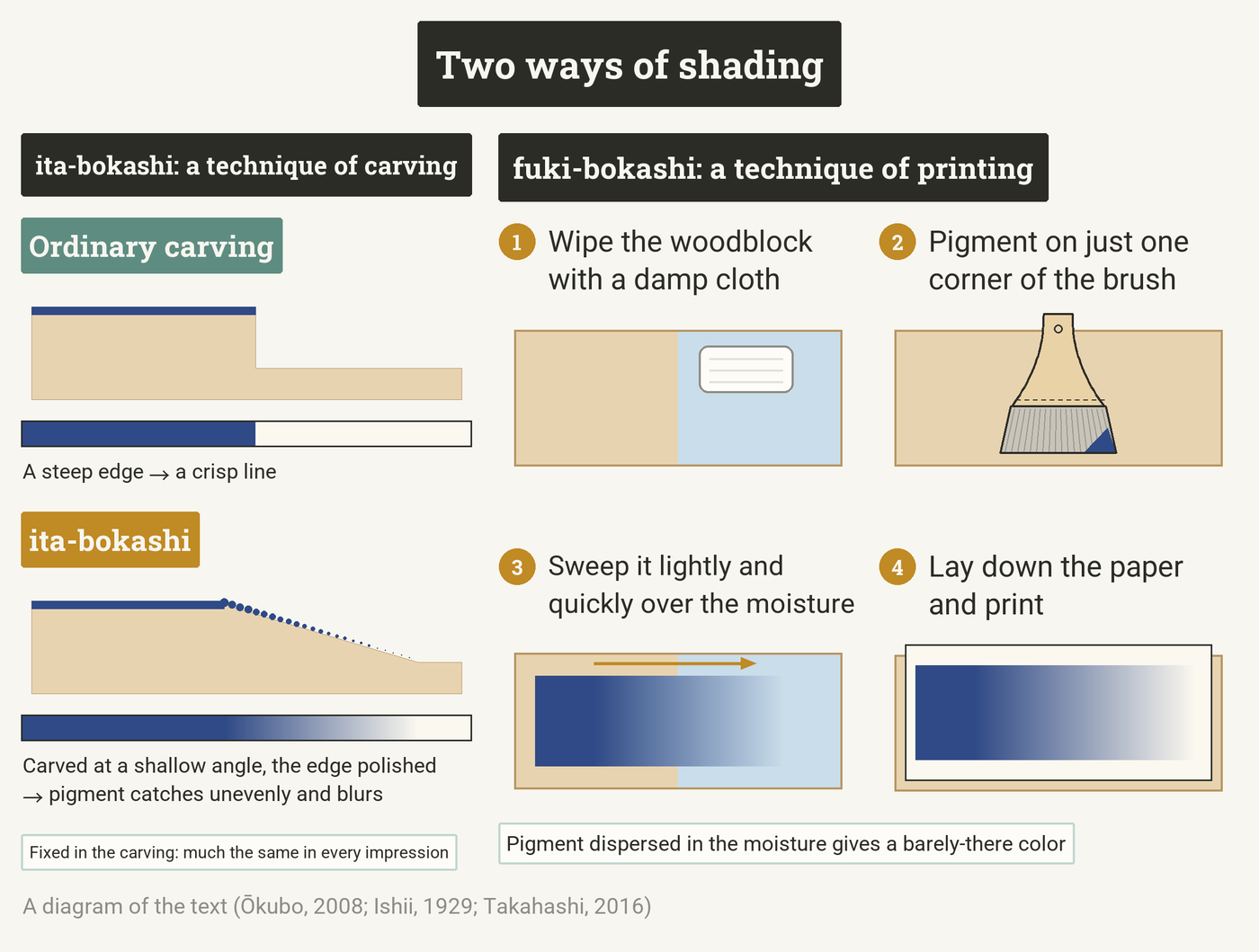
Two ways to do it: shade by carving, or shade by printing
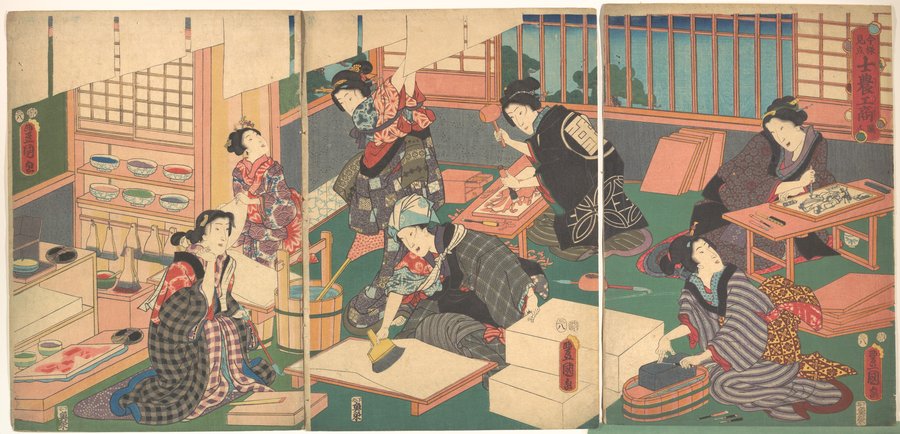
In ita-bokashi, part of the block is carved at a shallow angle and polished, so the shading is fixed and comes out much the same in every impression. In fuki-bokashi, the printer dampens the block with a cloth and sweeps a brush, with pigment on just one corner, across the moisture; most shading in ukiyo-e is done this way, and it gives the wider and finer range.
The band of blue at the very top of the sky
The deep band running straight across the top of the sky in many landscape prints is "ichimonji-bokashi," a kind of fuki-bokashi. Keeping it the same width from one edge of the block to the other was a skill that took long practice.
Clouds that come out different in every one of a hundred impressions
"Atenashi-bokashi" has no carved shape: a drop of pigment falls into a little water on the block and is printed wherever it spreads, so no two impressions match. The artist marked only where it should go, and it was used where chance could be counted on to work, such as ragged clouds.
How far to shade was the printer's call
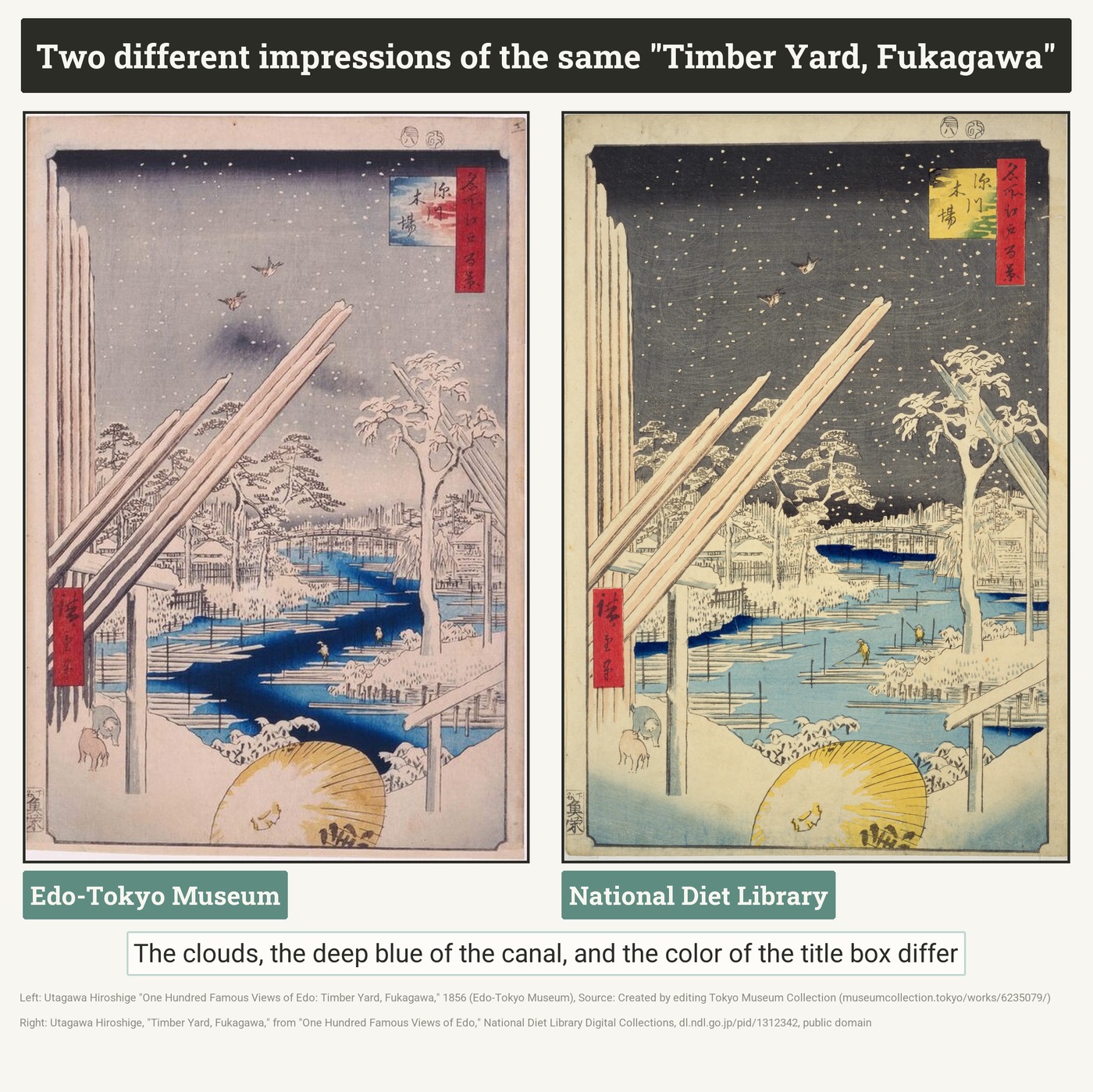
The artist marked roughly where to shade, but how far was largely left to the printer, so impressions of the same picture pulled at different times differ, and two impressions of "Timber Yard, Fukagawa" feel quite different. Hokusai himself wrote that fuki-bokashi comes out well only for about the first 200 impressions.
Often left out in later impressions
Because fuki-bokashi adds a step, later impressions of prints that sold well often left it out or replaced it with the easier ita-bokashi. Still, later impressions are not always worse: a record of 1853 mentions an impression of the finest quality issued about a year after a print first went on sale.
Why blue worked for shading the sky and the water
Blue from the indigo plant does not dissolve in water and would not spread on a damp block, but Prussian blue, the artificial pigment born in Berlin, shaded with ease. From around 1830, sky and water shaded in blue became the usual thing, giving depth to pictures without cast shadows.
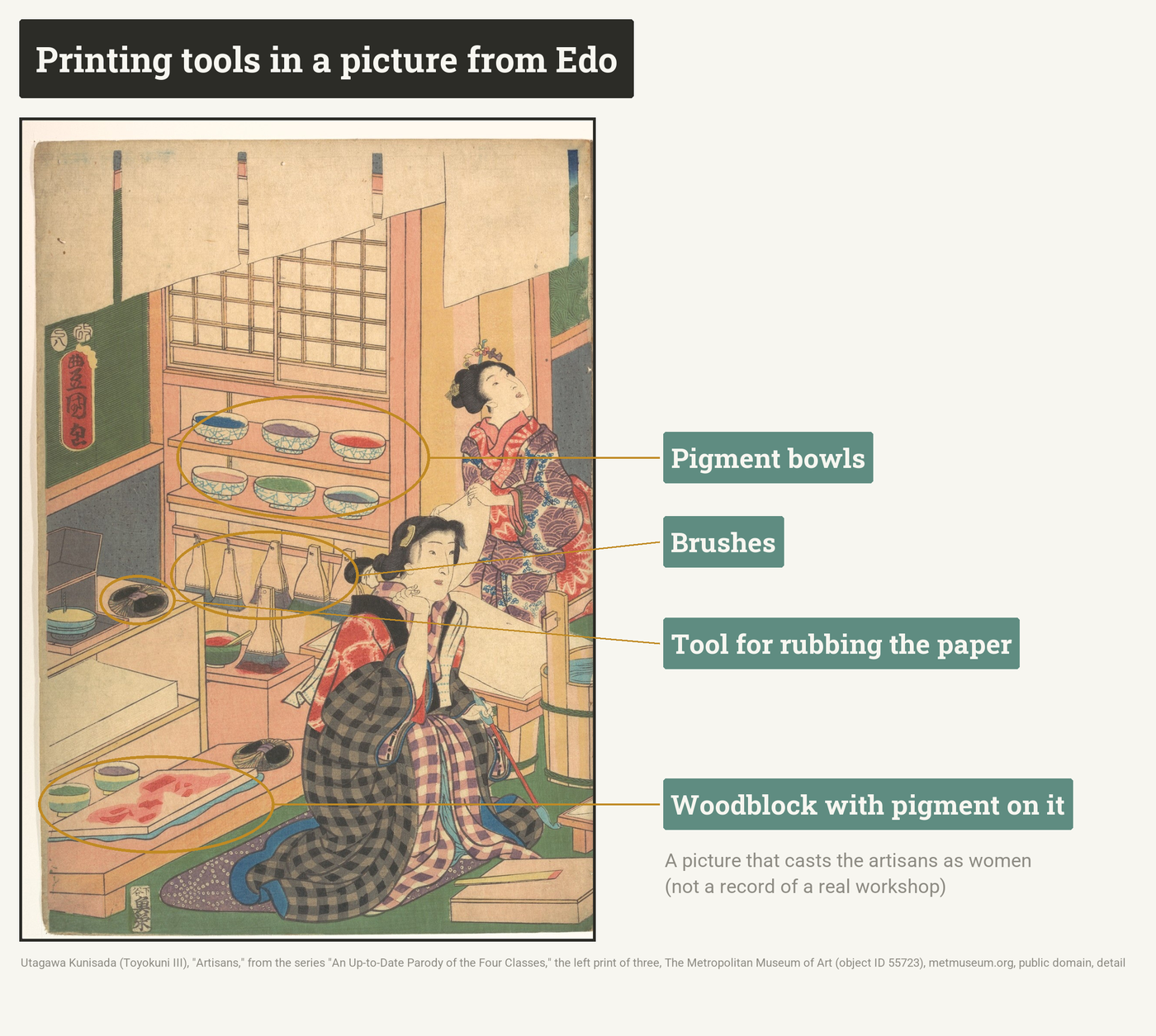
A 1929 book tells of a museum in Boston that asked Japan for a full set of printing tools; sent a few brushes, rags, and small bowls, some suspected that the real tools were being kept back. In daily life today, there are not many occasions to encounter ukiyo-e, apart from seeing them in museums. But many of the techniques, worked out with the tools and skills of their own time, surprised me, and I felt there are elements in them that could still be used today.
How I researched this
The explanation rests on two books on technique, one from 2008 and one from 1929 by a collector who carved and printed blocks himself; far apart in years, they agree on the kinds of shading. The view from a workshop today comes from a woodblock print studio in Kyoto, and this article does not go into the chemistry of the pigments.
Prints in this article