The Stories Behind Old Japan
甲州石班沢Kōshū Kajikazawa
Hokusai's Blue Came from Berlin
"Kajikazawa in Kai Province" and Prussian Blue
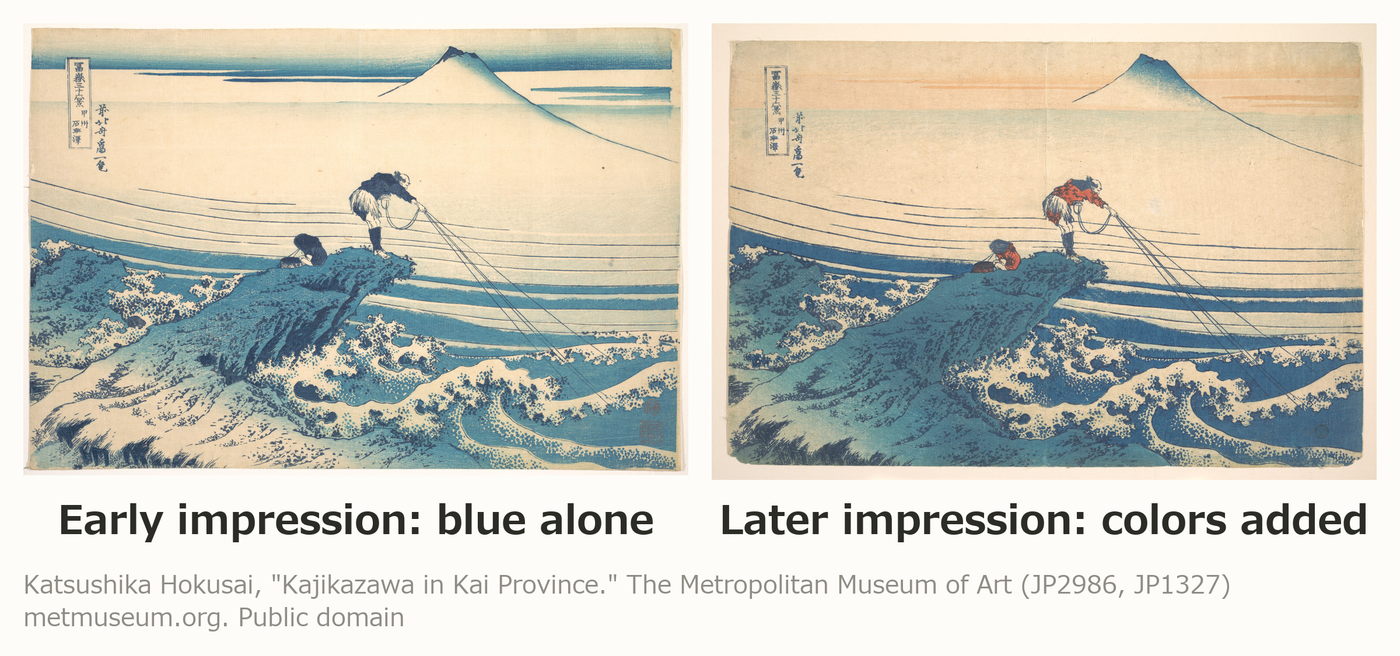
Hokusai's "Kajikazawa in Kai Province" survives in two versions pulled from the same woodblocks: one almost entirely blue, the other with color added. The blue is not a Japanese blue but a pigment born in Berlin.
A print with nothing but blue
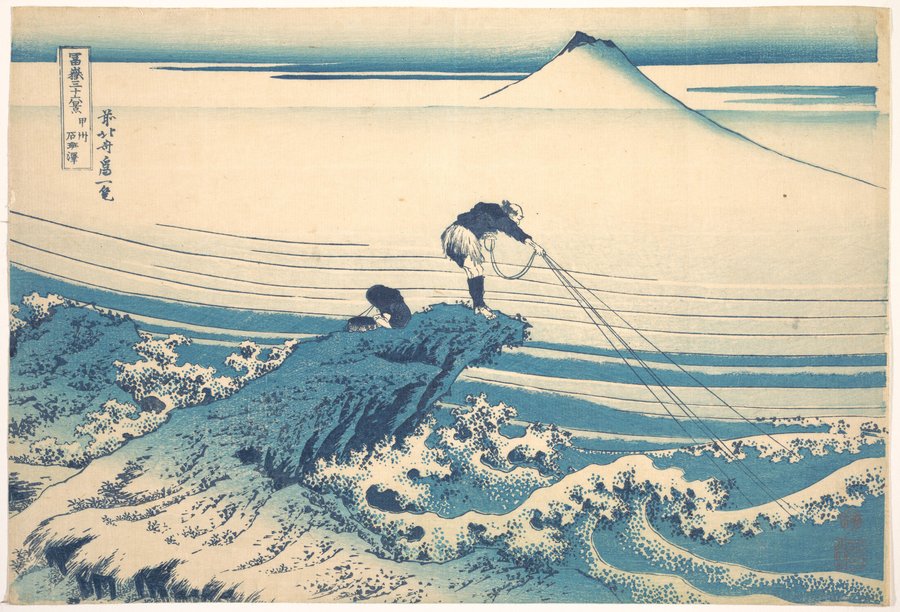
Apart from two small red seals, the whole print is made of shades of a single blue, from deep navy to pale sky blue.
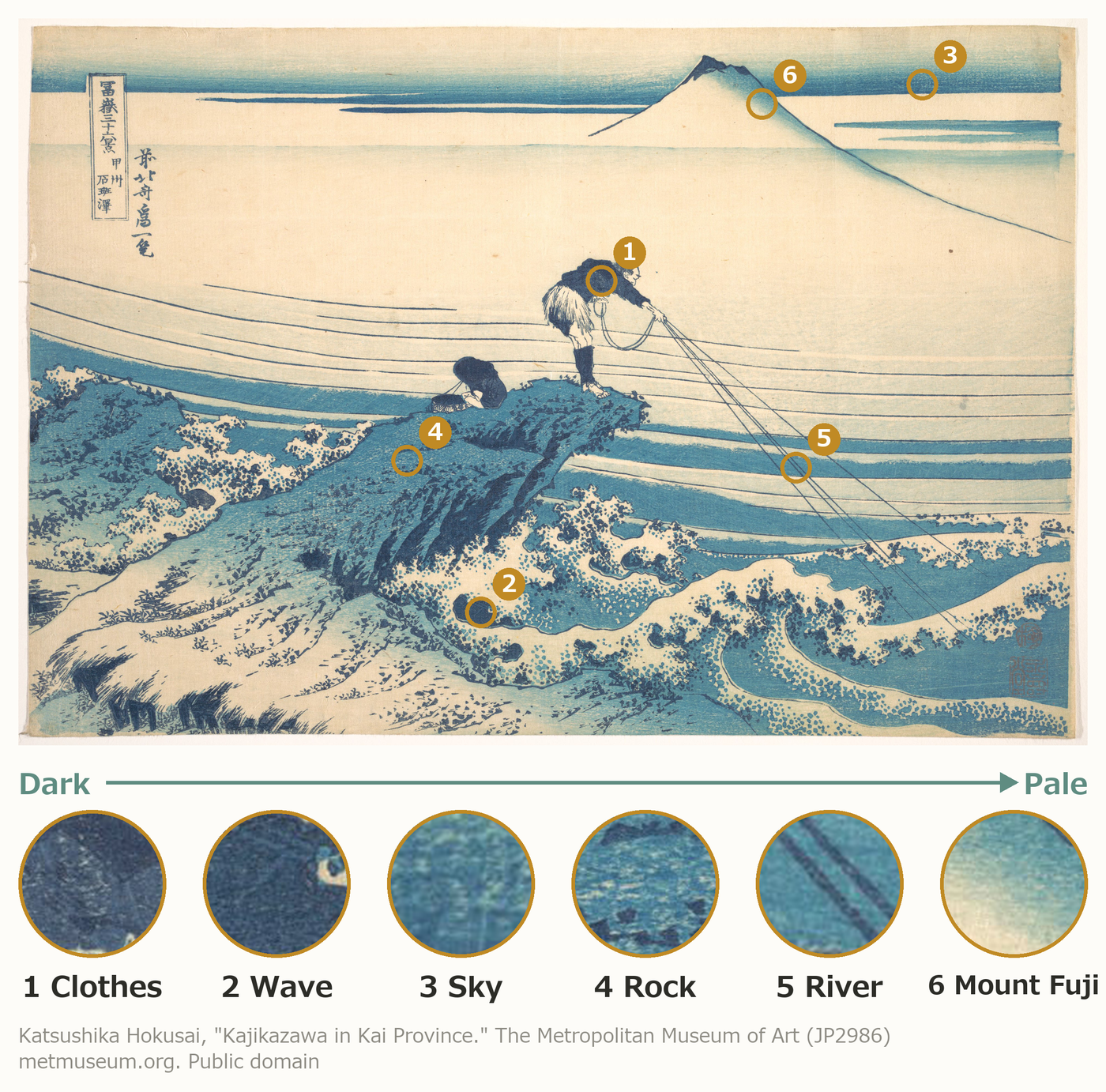
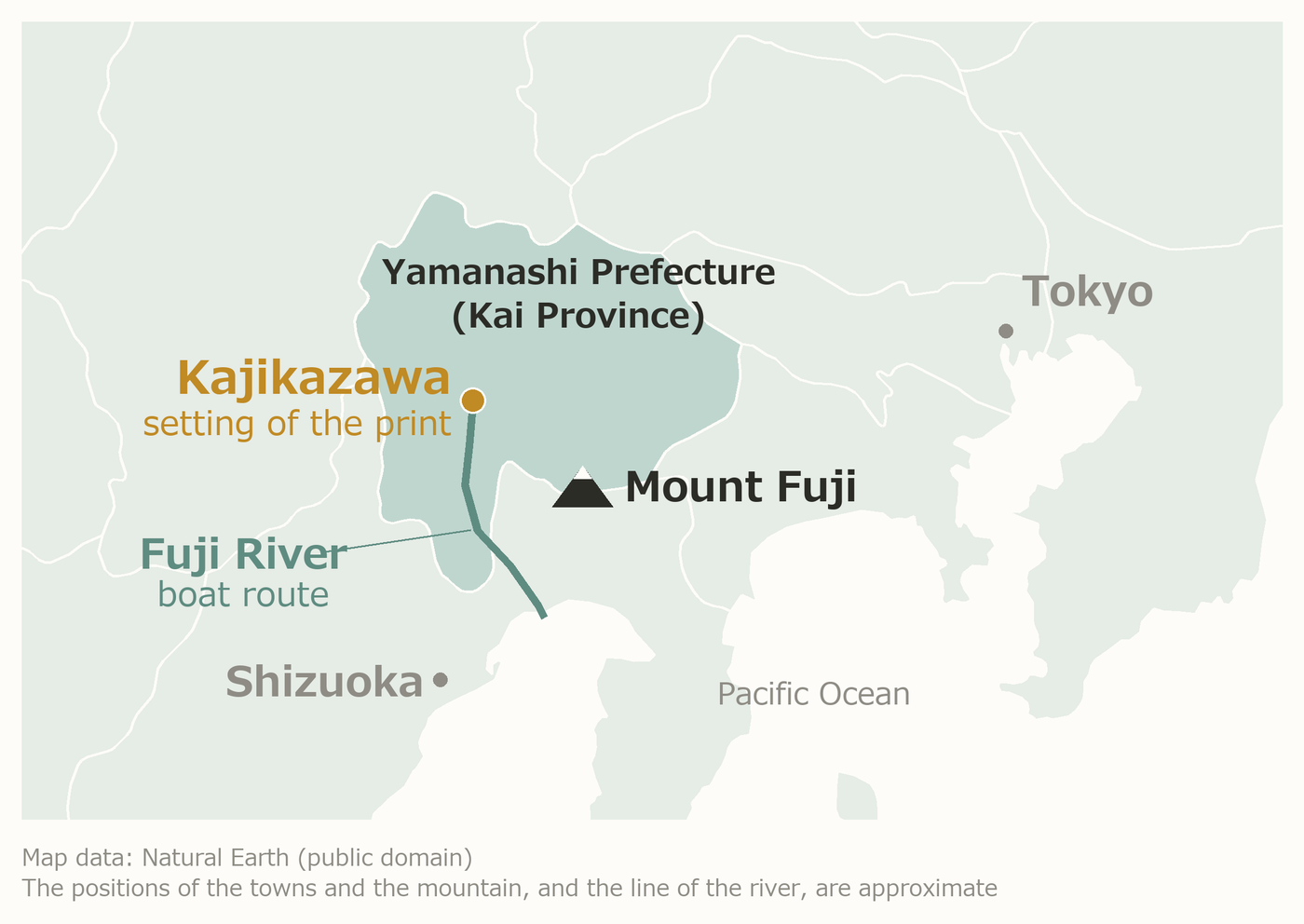
The place called Kajikazawa, and the riddle of the lines
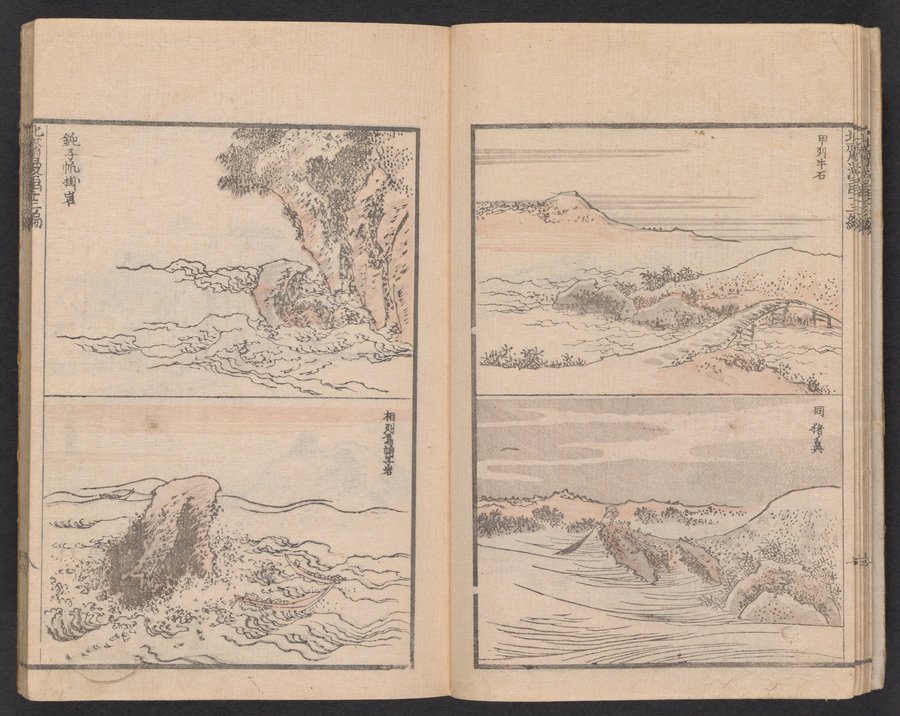
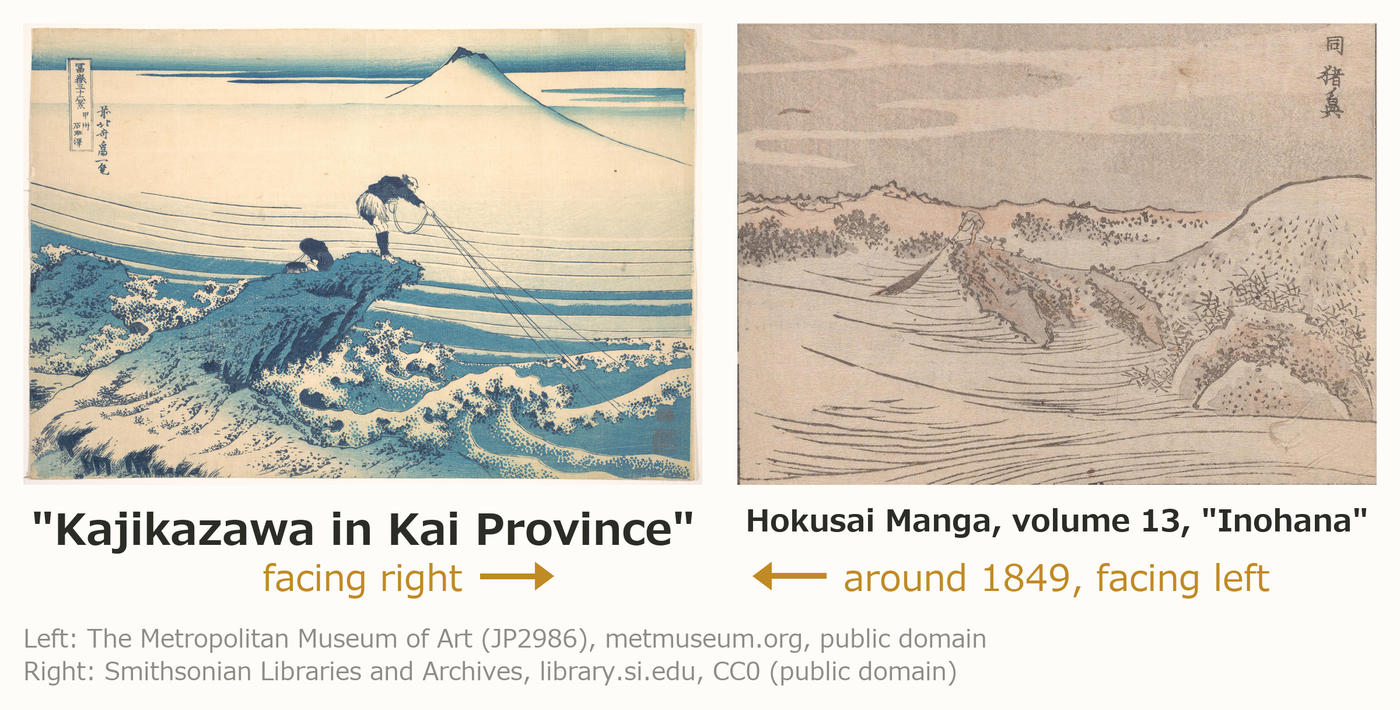
The title points to a real river town, but the view itself is probably imagined. The books do not agree on what the fisherman's lines are.
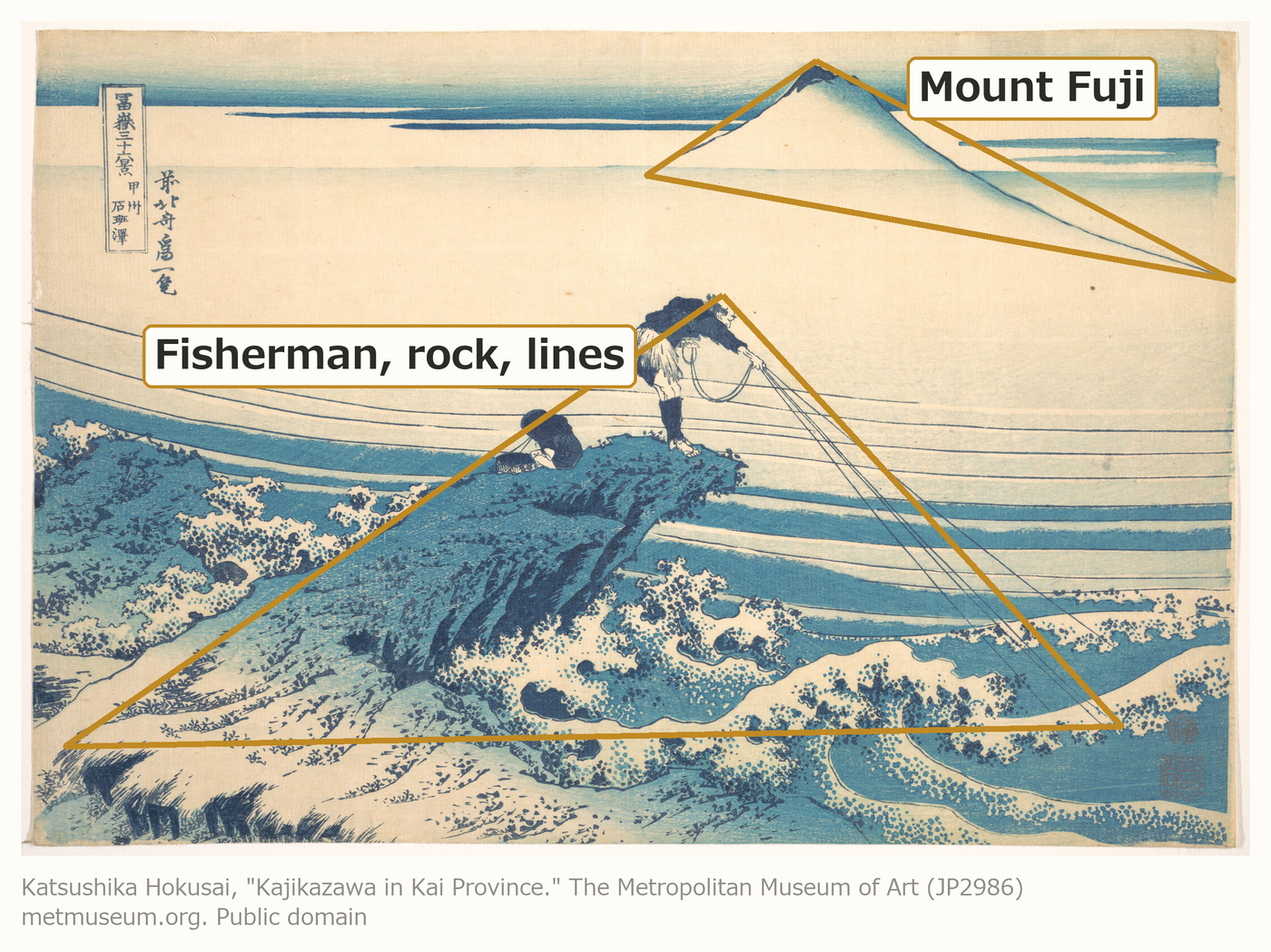
Two triangles, and depth from shades of blue alone
The fisherman's triangle and the triangle of Mount Fuji echo each other. The depth between them comes from shades of blue, not from Western perspective.
The trouble with blue until then
The older plant blues either faded or could not be shaded smoothly, so sky and water could only be shown in a somber blue.
From Berlin to Edo
A man-made blue from Europe came in through Nagasaki and became cheap. Around 1830, the blue of Edo's prints switched to it, though the accounts differ on who used it first.
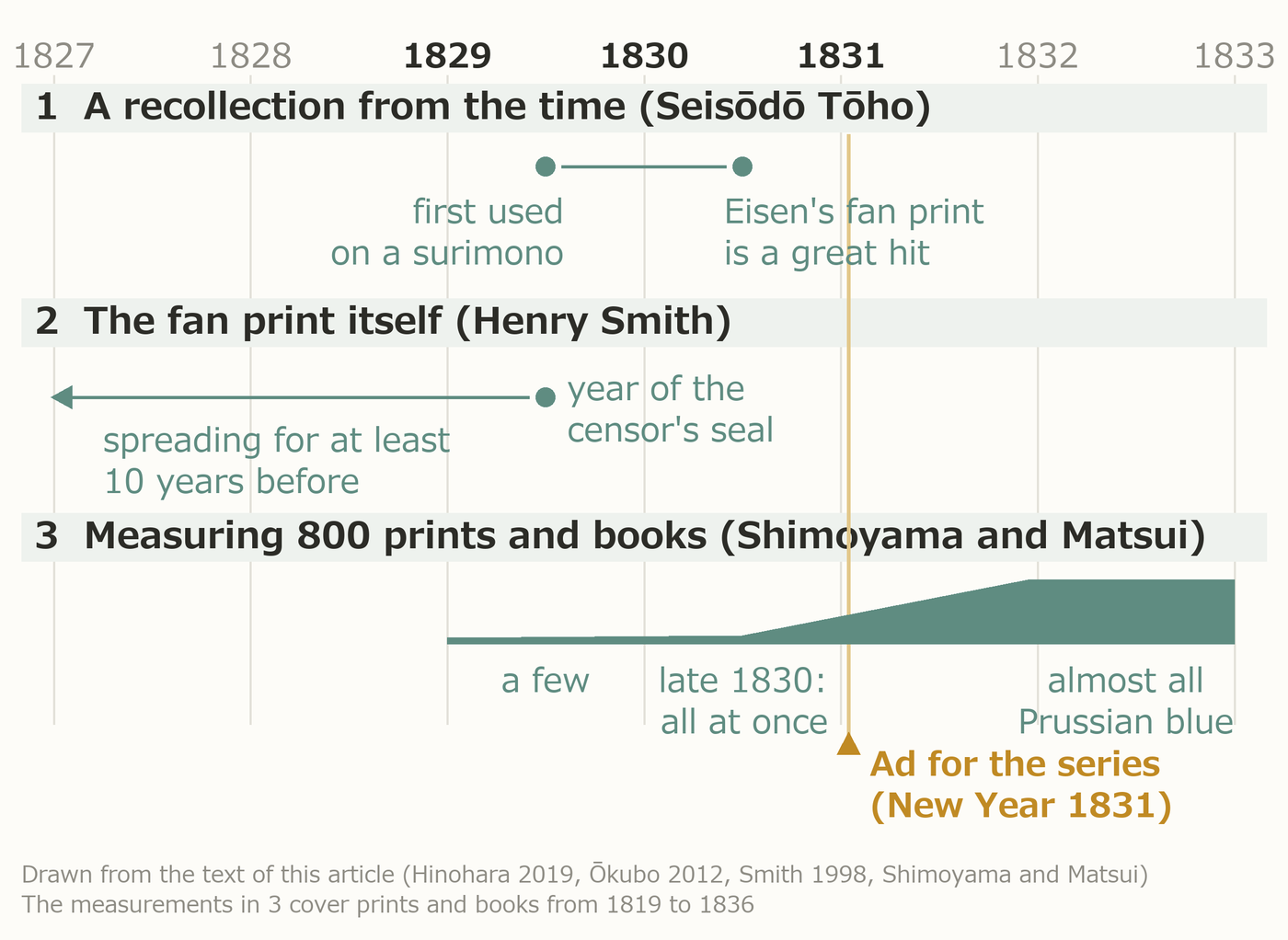
"Aizuri ichimai": blue was the selling point
Printing in blue alone was the selling point of the Fuji series. Measurement later showed that the printers used the old blue for outlines and the new blue for colored areas.
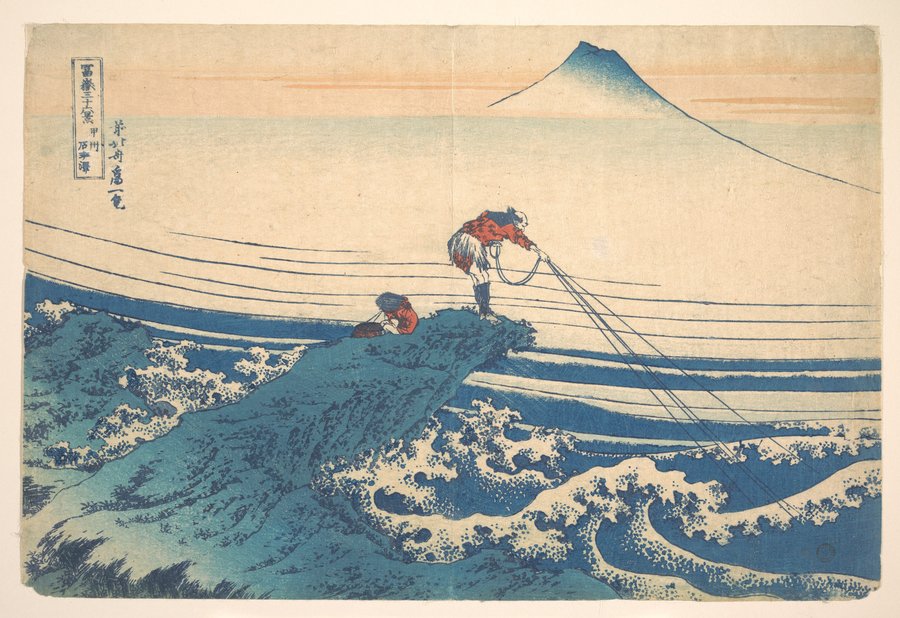
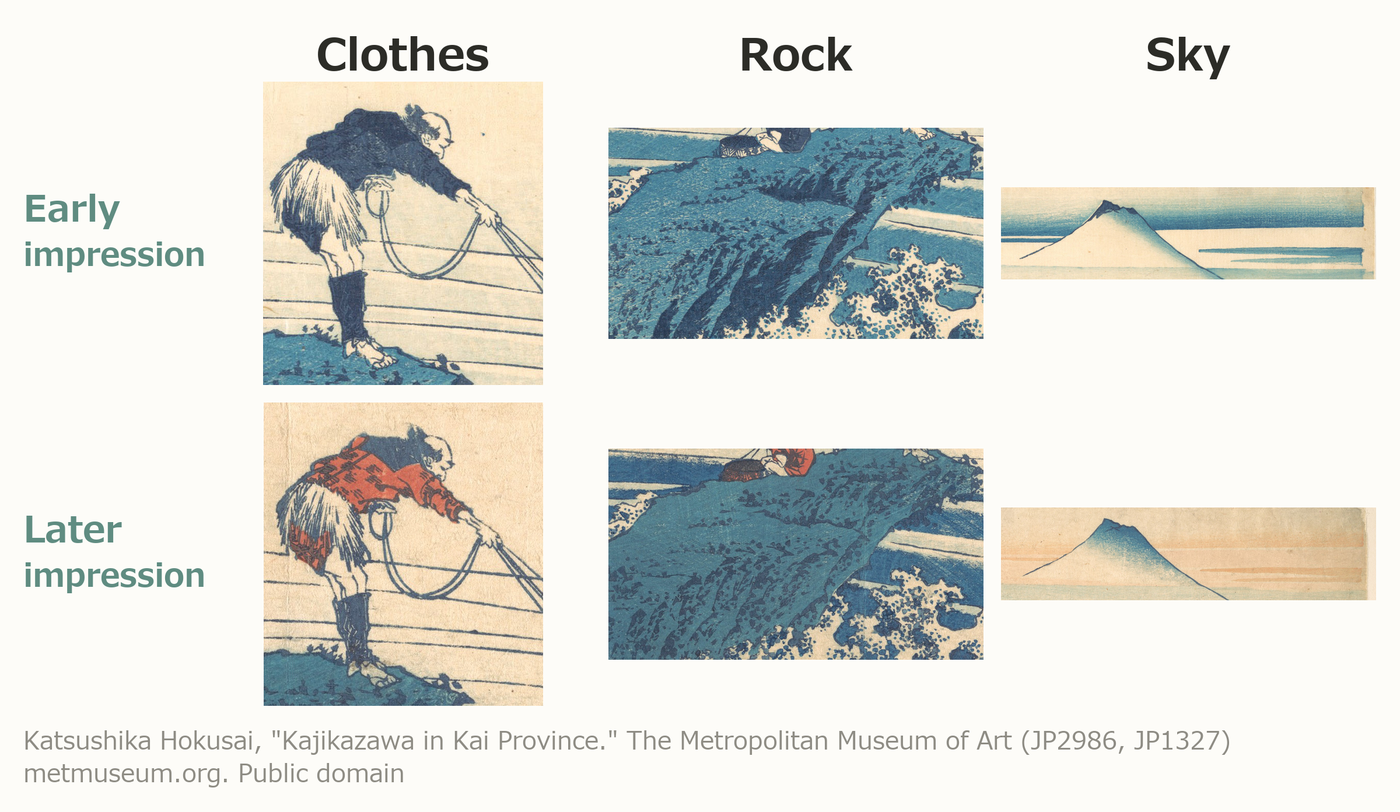
In later impressions, color is added
In later printings, the publisher added colors. Which version you are looking at changes how you read the picture.
After Hokusai: the age of sky and water
Other artists soon used the new blue for sky and water, and it became the material basis for landscape prints as a field of their own.
How I researched this
I set Japanese-language books and papers side by side. Where they disagree, I left the disagreements side by side.
Prints in this article