 The Stories Behind Old Japan
梅鉢Umebachi
How a God's Crest Became the Crest of a Million Koku
Following the Umebachi and the Plum from Sugawara no Michizane to the Maeda Family
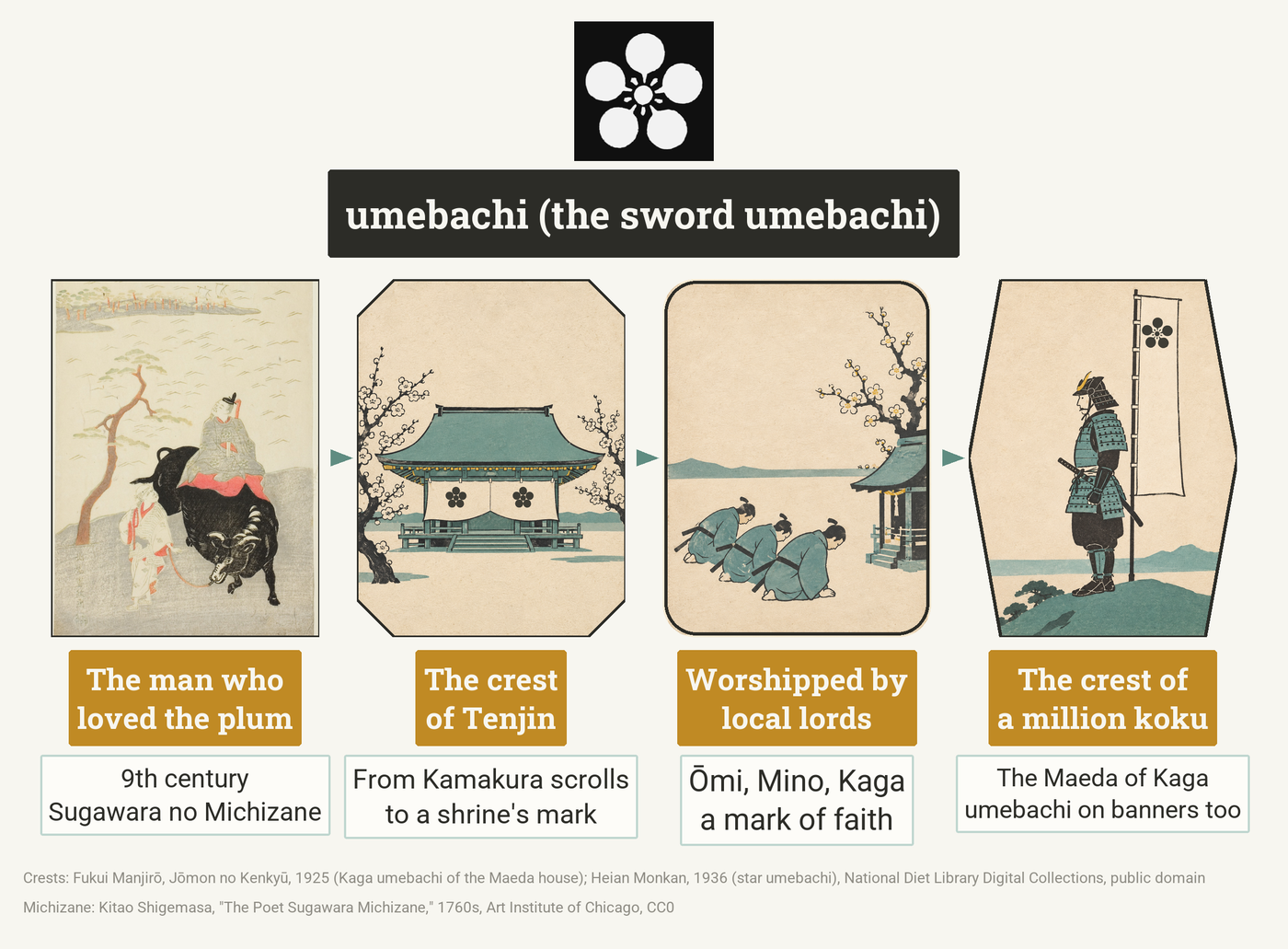
In Japan there are more than ten thousand shrines that enshrine one man, Sugawara no Michizane, as a god, and many of them display a plum crest, though its shape is not the same from place to place. This summary follows how that plum passed from the shrine to one of the greatest daimyo families in Japan.
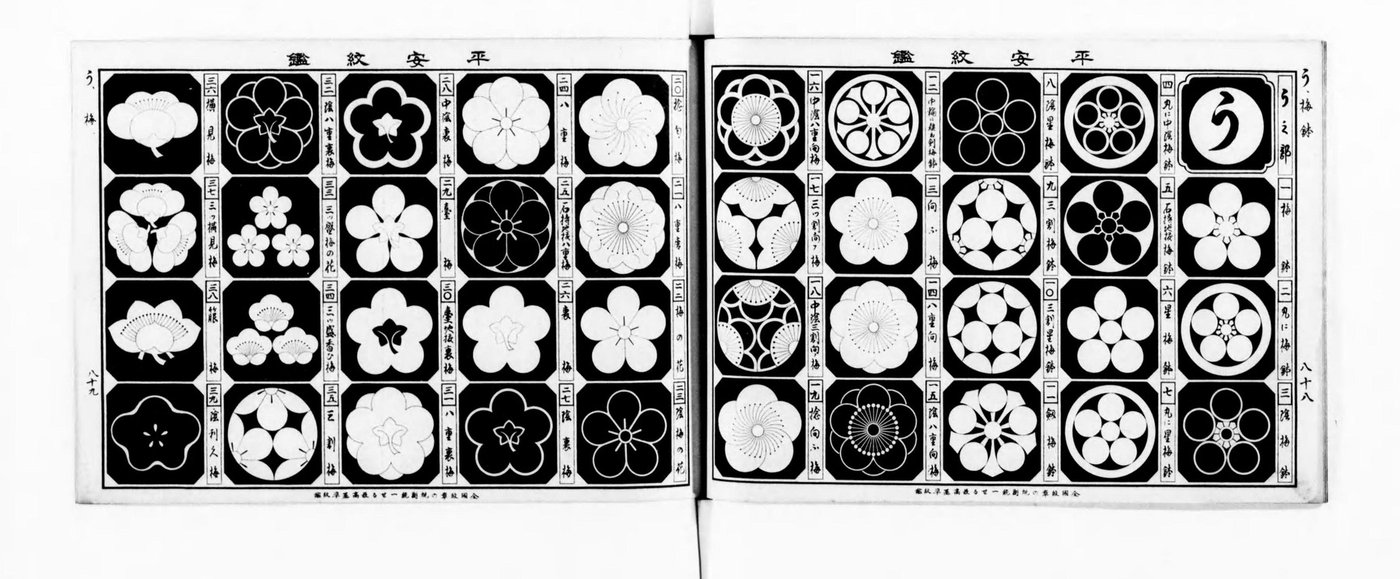
One plum, two lines
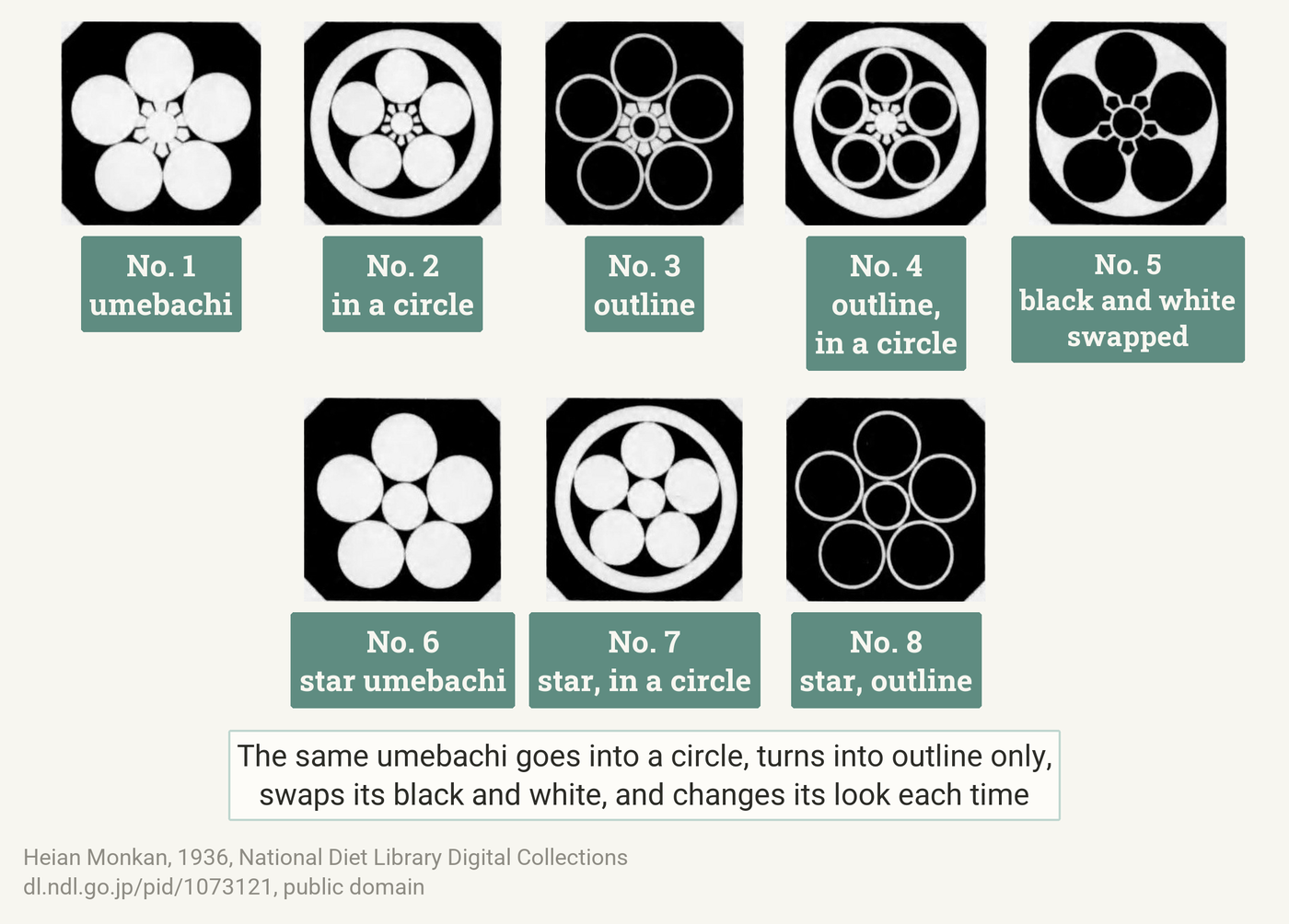
Books on family crests keep two kinds of plum crest apart: the plum blossom, drawn with petals, and the umebachi, built from circles set in a ring, which is by far the more common. Where the name umebachi comes from is still disputed, and what this article follows is not the shape but the people who used it.
Michizane, the man who loved the plum
Michizane was a scholar in Kyoto who rose to minister, was exiled to Kyushu, and died there; many stories tie him to the plum, though not every writer takes them at face value. After his death, the misfortunes that struck the capital were blamed on his vengeful spirit, and he came to be worshipped as Tenjin, at shrines called Tenmangū.
Picture scrolls and written oaths: when the crest still belonged to the god
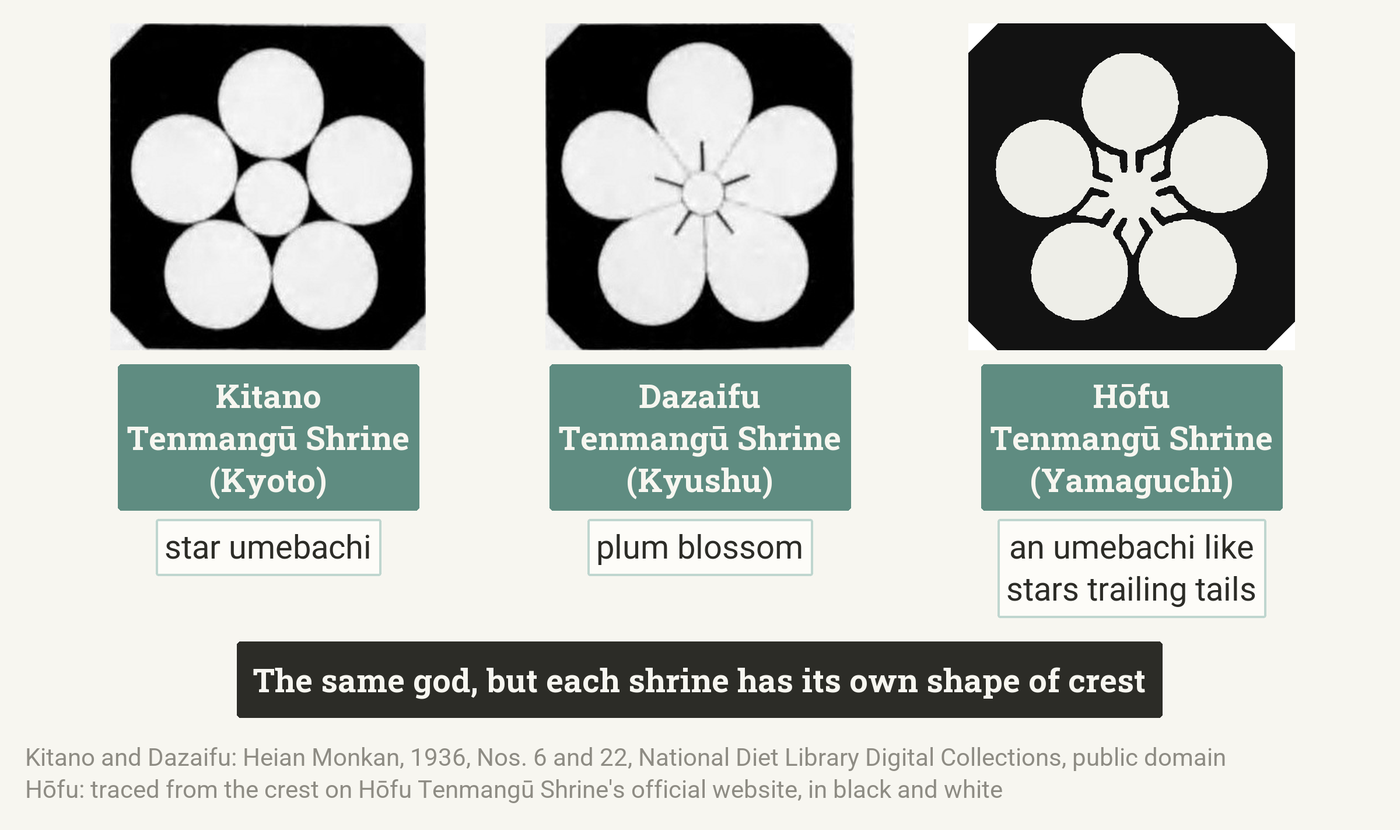
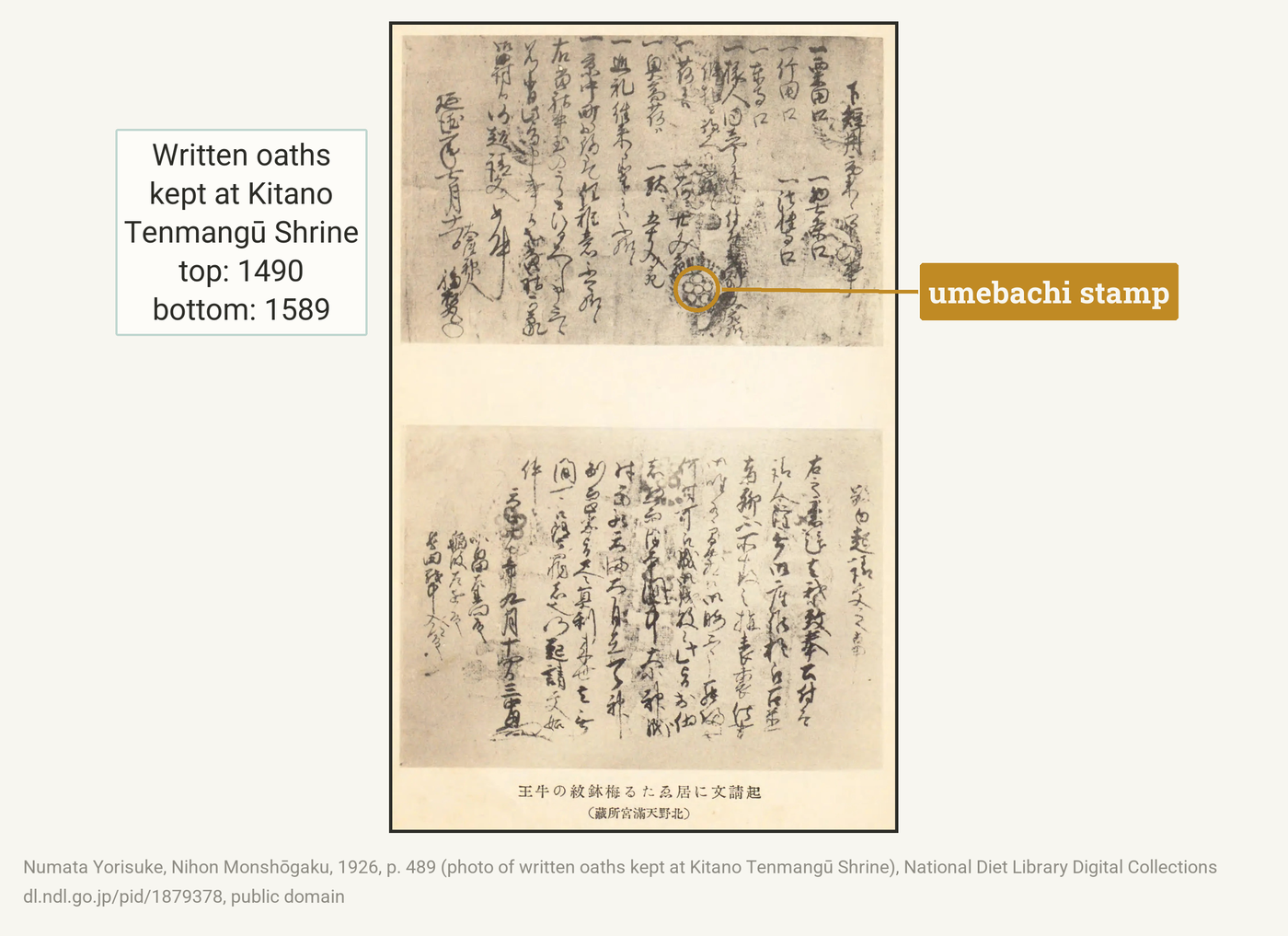
There is no trace of Michizane himself using the plum as a family crest; the first sure sign is a picture scroll of Kitano Tenmangū Shrine, by which time the umebachi had become a shrine crest meaning faith. Yet the shape differs from shrine to shrine, depending on where each shrine received its share of the god.
When warriors later swore oaths to the gods, they wrote them on paper stamped with the umebachi as the seal of the god.
The local lords who worshipped at Tenmangū
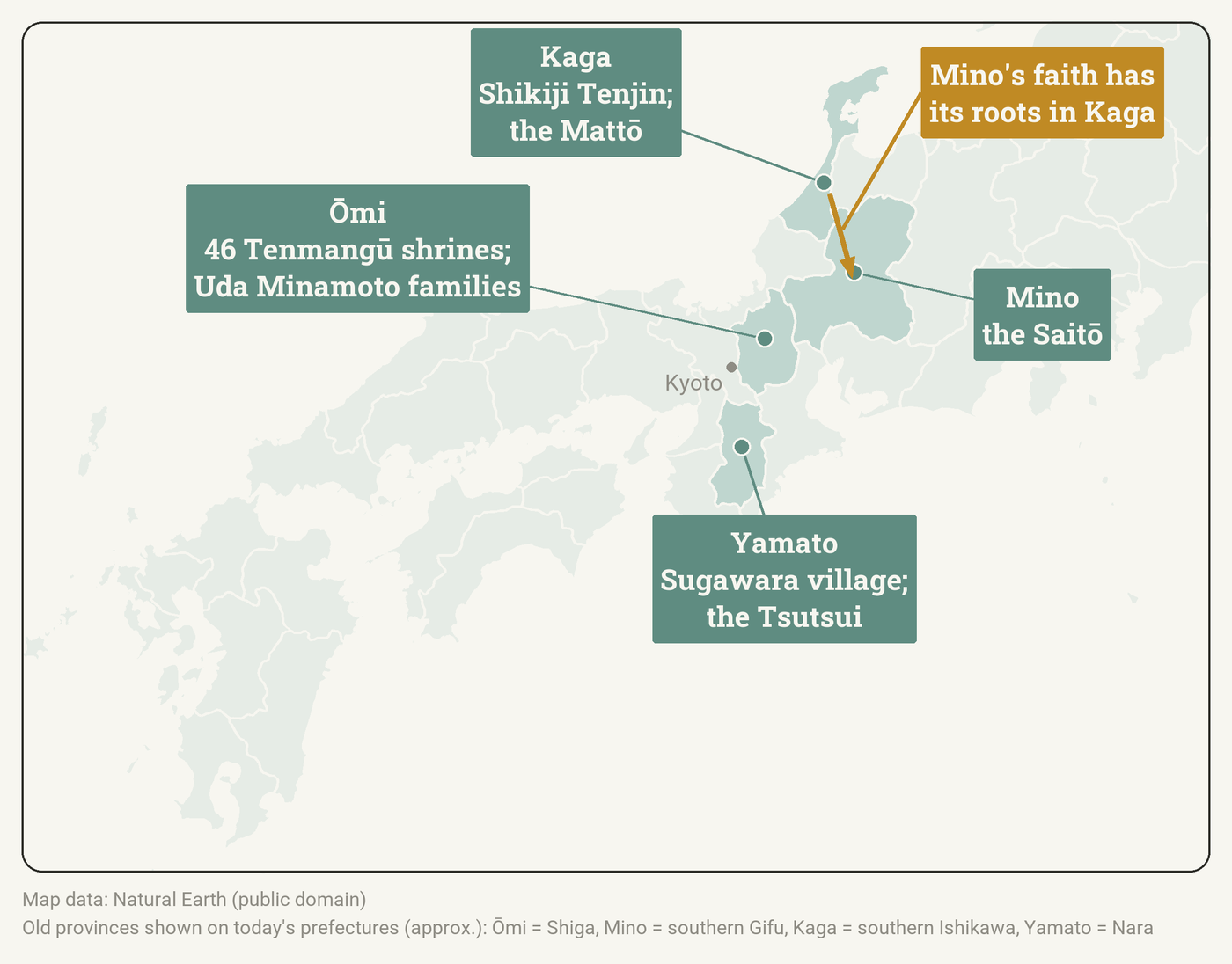
A god's crest became a family's crest by two roads: Michizane's descendants took the crest of their deified ancestor, and families with no blood tie took it out of faith in Tenmangū, a road that spread much further. In the Warring States period, its heaviest users were the local warrior families of Ōmi and Mino, near Kyoto.
The crest first, the clan name later
For many umebachi families the crest came first and the lineage later: they took the umebachi out of faith, and only afterward began to claim descent from Michizane. The biggest example is the Maeda of Kaga, whose own history traces them to Michizane, while scholars read them as a branch of a warrior family of Mino.
The bachi of a million koku
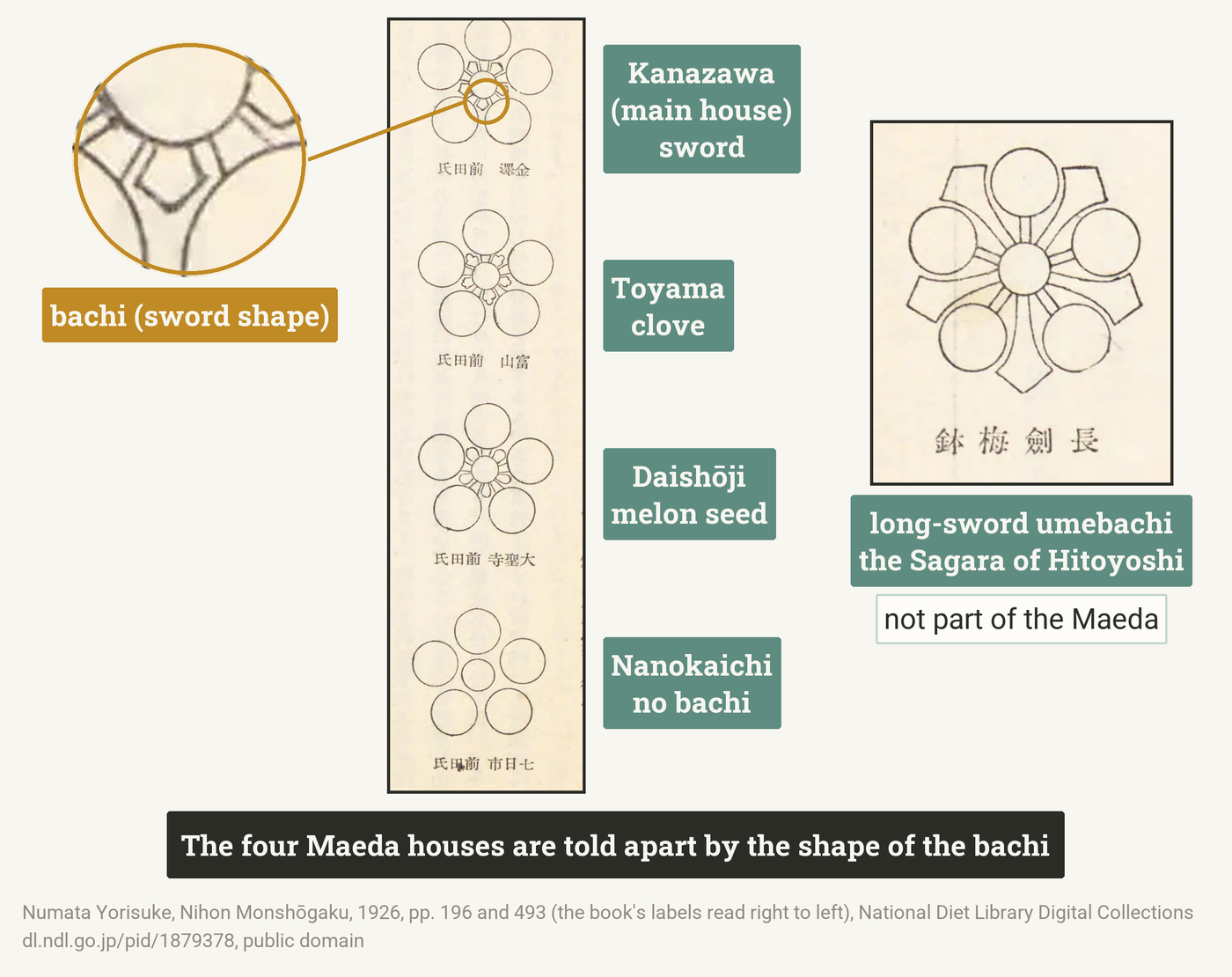
Maeda Toshiie became the great daimyo of Kaga and stuck to the umebachi, and his main house came to hold lands of over a million koku of rice. The four Maeda houses are told apart by the shape of the short bars between the circles, the bachi, and the main house uses the sword umebachi.
Where the umebachi is today
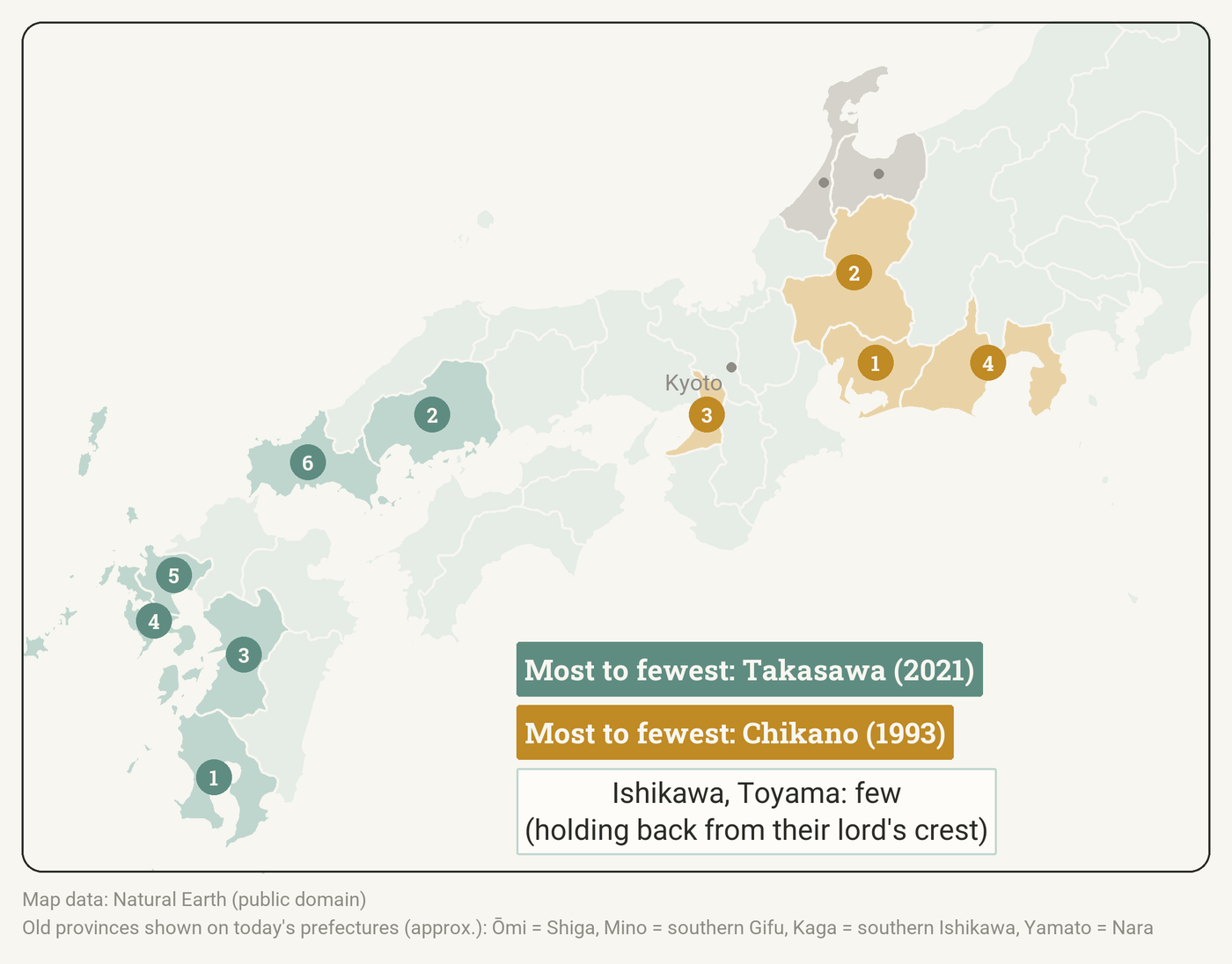
Where the umebachi is common today depends on who counts, but it is clearly scarce in the Maeda's own home ground, where families seem to have held back from their lord's crest. The shrines there, by contrast, display it more than anywhere else in Japan.
The Maeda umebachi came from the Tenmangū faith of Mino, whose roots lay in Kaga, so when the Maeda became the daimyo of Kaga, the crest returned to that land by chance. When I hear "plum," what comes to mind is the umeboshi, the pickled plum, inside a rice ball, and it made me feel that something people still enjoy today has been loved in all sorts of forms since long ago.
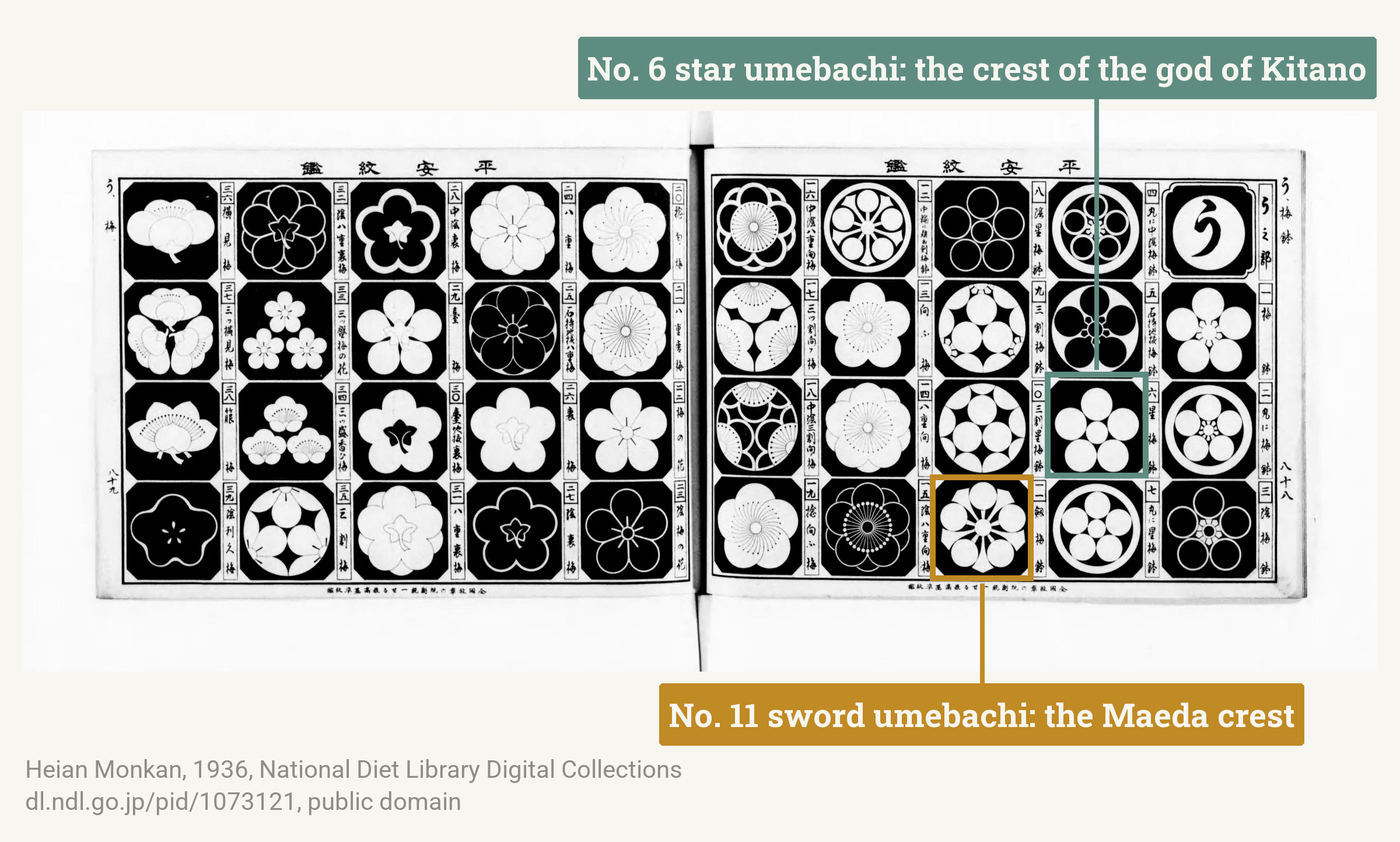
How I researched this
The books disagree on many points, from how many shrines there are to whether the Maeda descend from Michizane, so this article sets them side by side and does not force them into one answer. For the 1926 book used most, I read the scanned page images at the National Diet Library rather than the garbled machine-read text.
Crests in this article
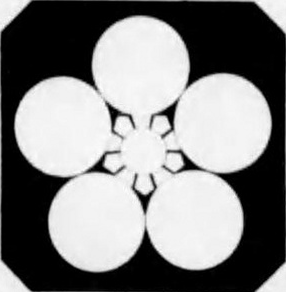
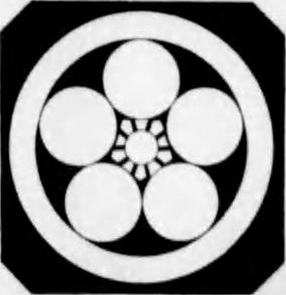
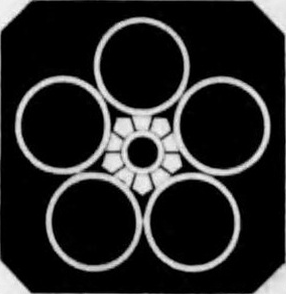
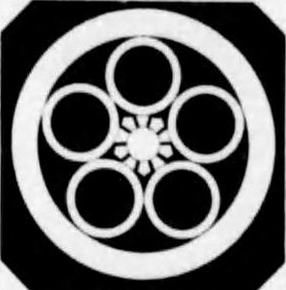
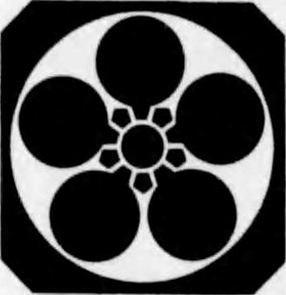
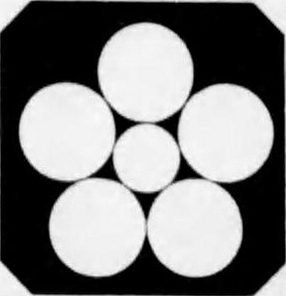
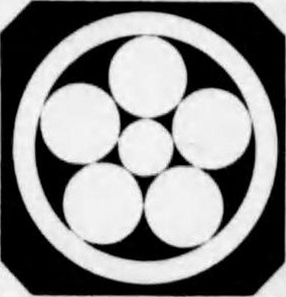
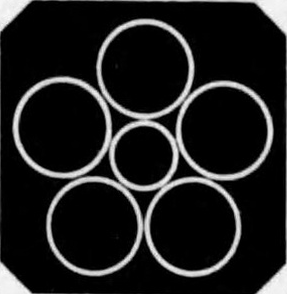
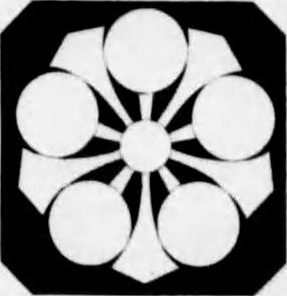
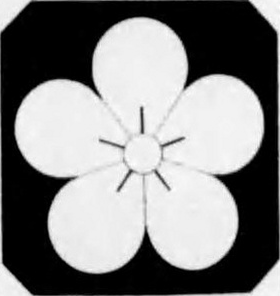
All crests: Heian Monkan (1936), pp. 88–89. National Diet Library Digital Collections, pid 1073121, public domain. Numbers are the catalog's own. · holder's page