 The Stories Behind Old Japan
巴Tomoe
From Shrine Roofs to Family Crests
How the Tomoe Became Hachiman's Crest, Then a Crest of Warrior Families
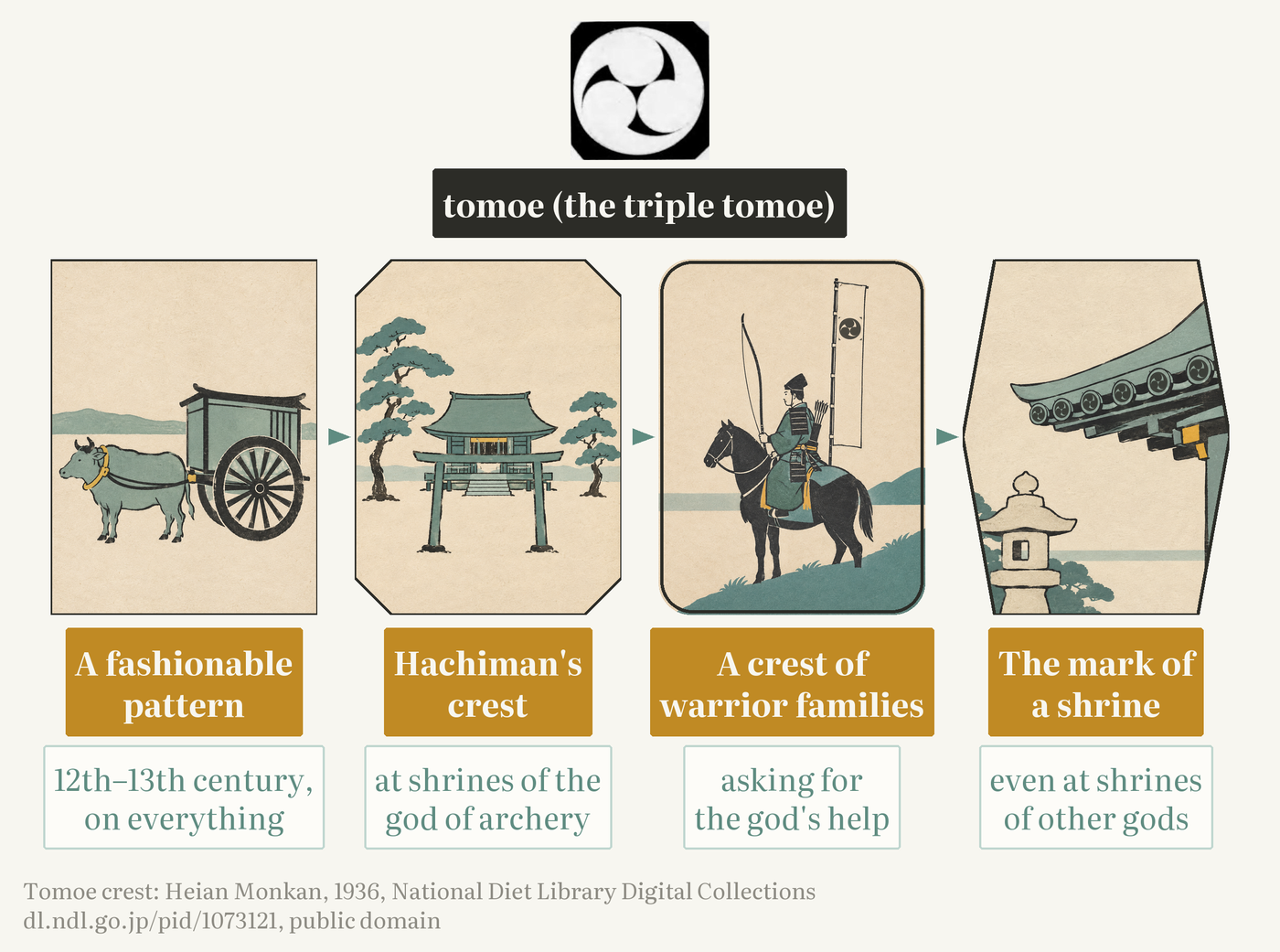
About three in ten of Japan's major shrines display the same crest: three comma-like shapes, each with a round head and a thin tail, turning inside a circle. It is called tomoe, and following its trail shows how it became the crest of shrines, and then of warrior families.
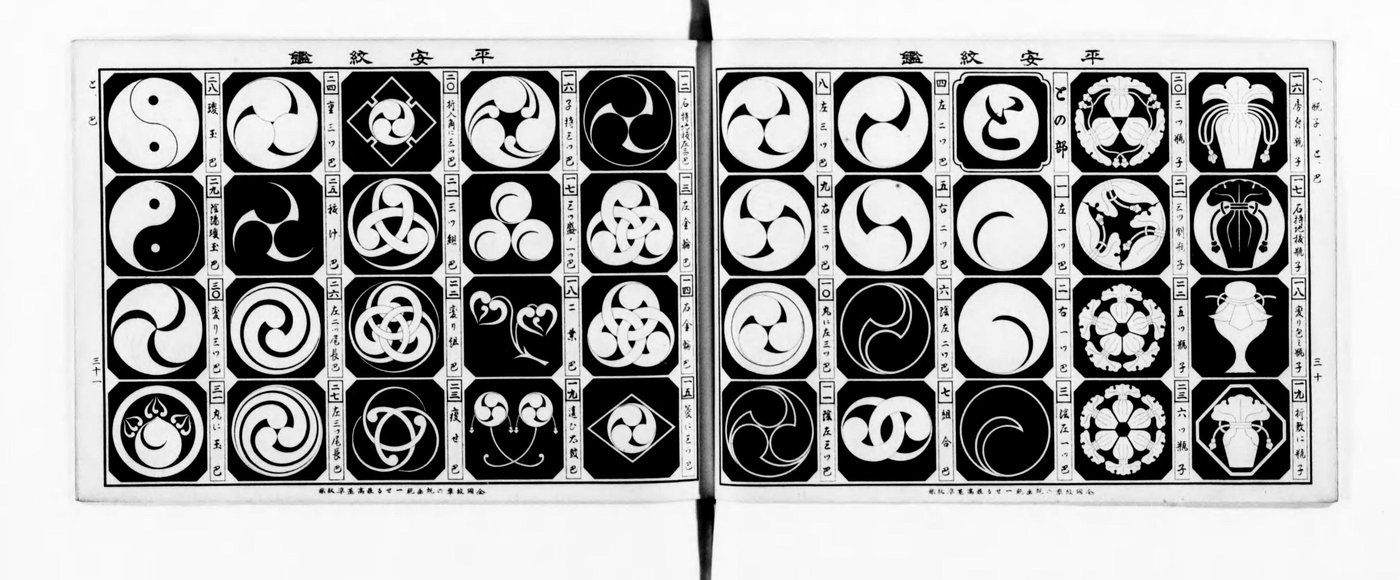
The crest you see most at Japan's shrines
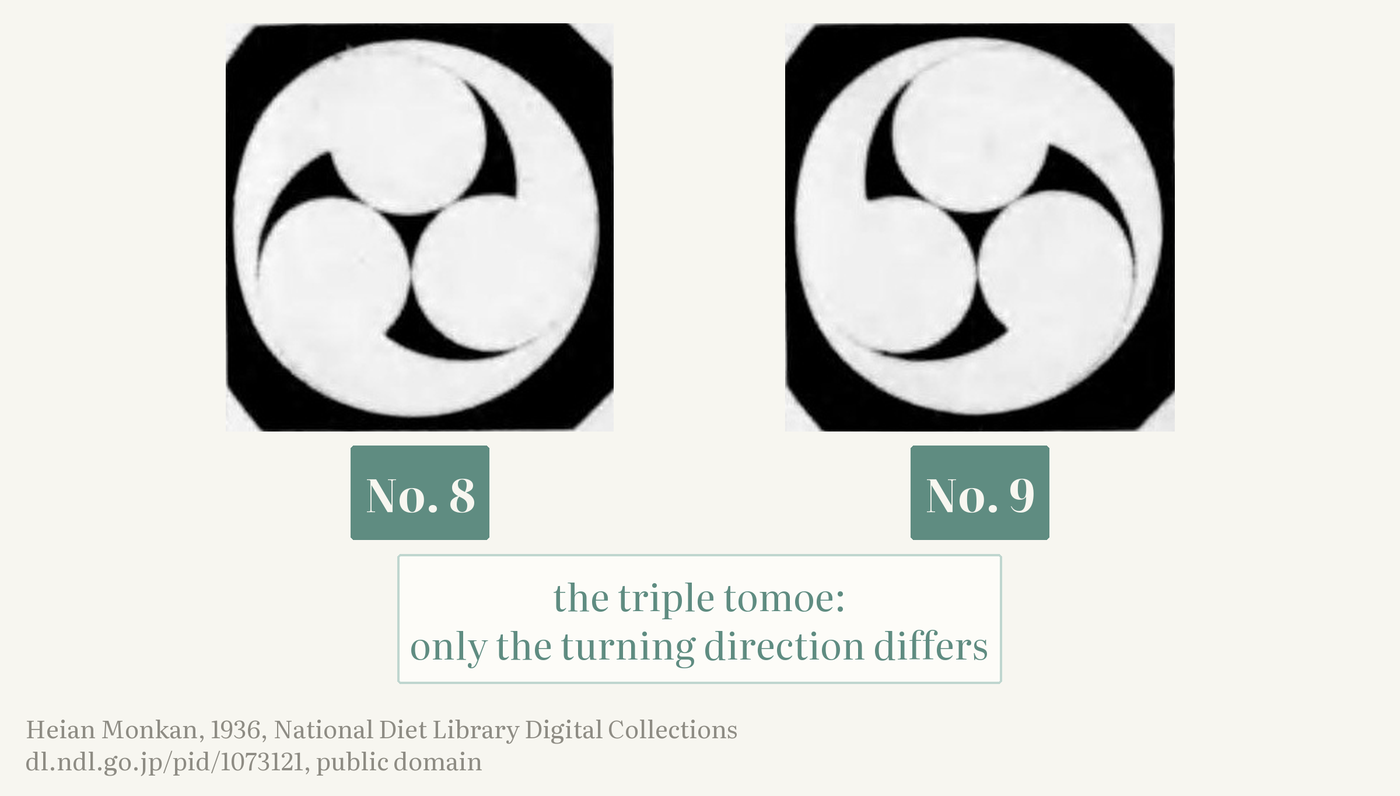
The tomoe has reached shrines in almost every part of Japan, on roof tiles, metal fittings, lanterns, ceilings, and curtains. One old catalog lines up 31 shapes of tomoe, and the most common, at shrines too, is the triple tomoe with three heads, which comes in two turning directions.
It began as a fashionable decorative pattern
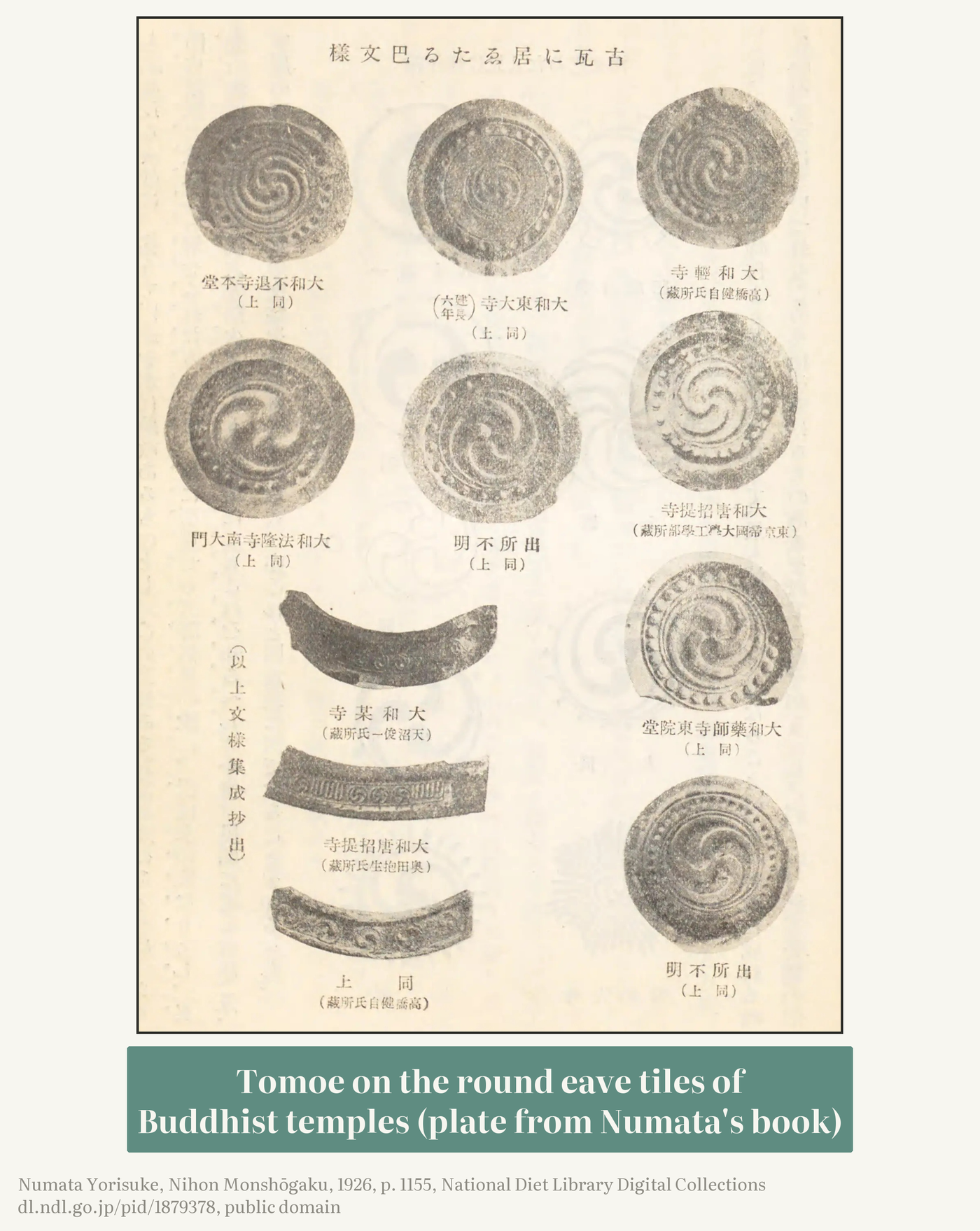
In the 12th and 13th centuries the tomoe was a hugely fashionable pattern that went on weapons, clothing, carriages, and boats. It also replaced the lotus on temple roof tiles, where people saw it as a whirlpool, a charm against fire.
It becomes the crest of Hachiman
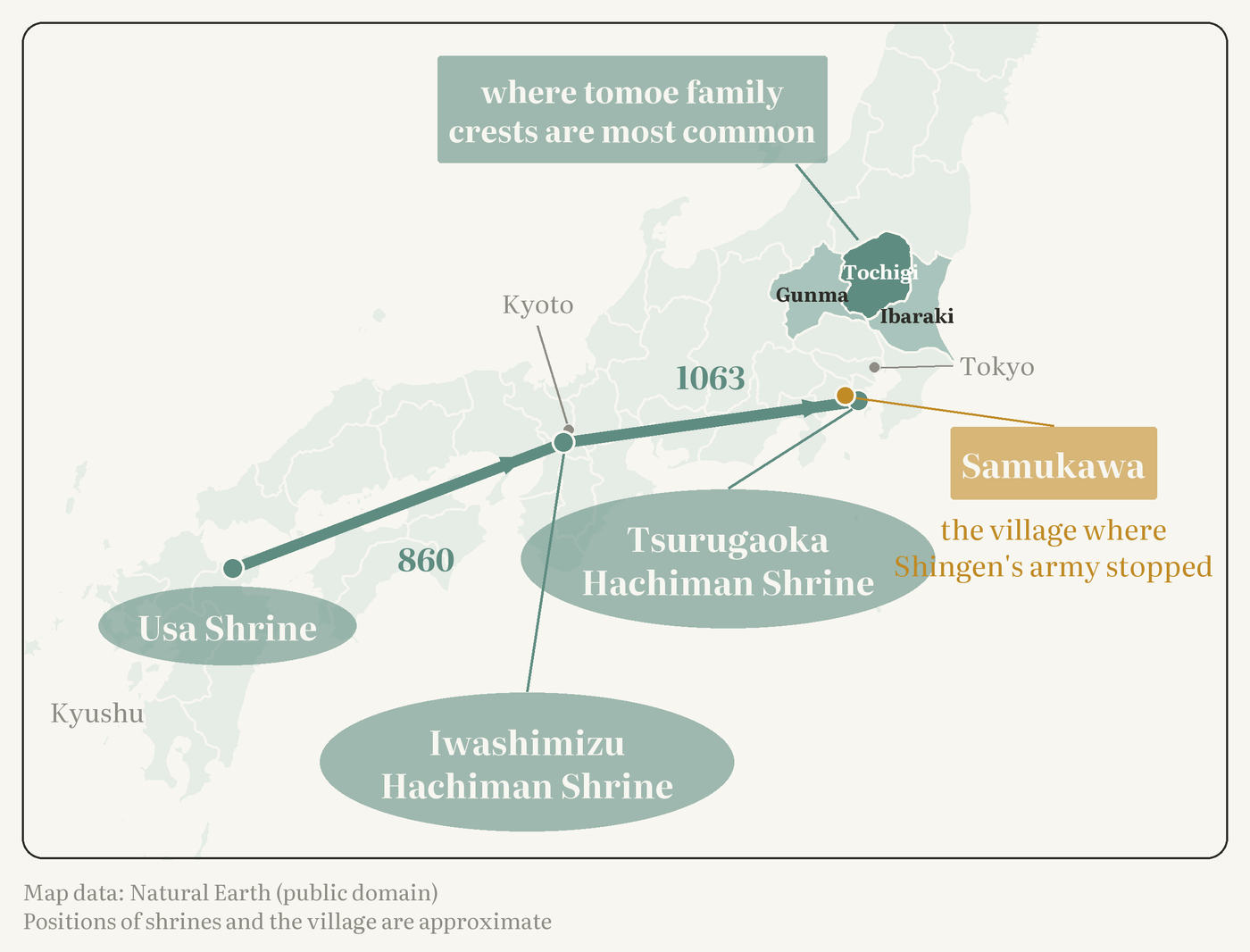
Hachiman is the god of archery, and the Minamoto warriors prayed to him before battle. From the original shrine in Kyushu, Hachiman was enshrined near Kyoto and then in Kamakura, and almost all of the tens of thousands of Hachiman shrines across Japan branched off from these three, every one of them bearing the tomoe.
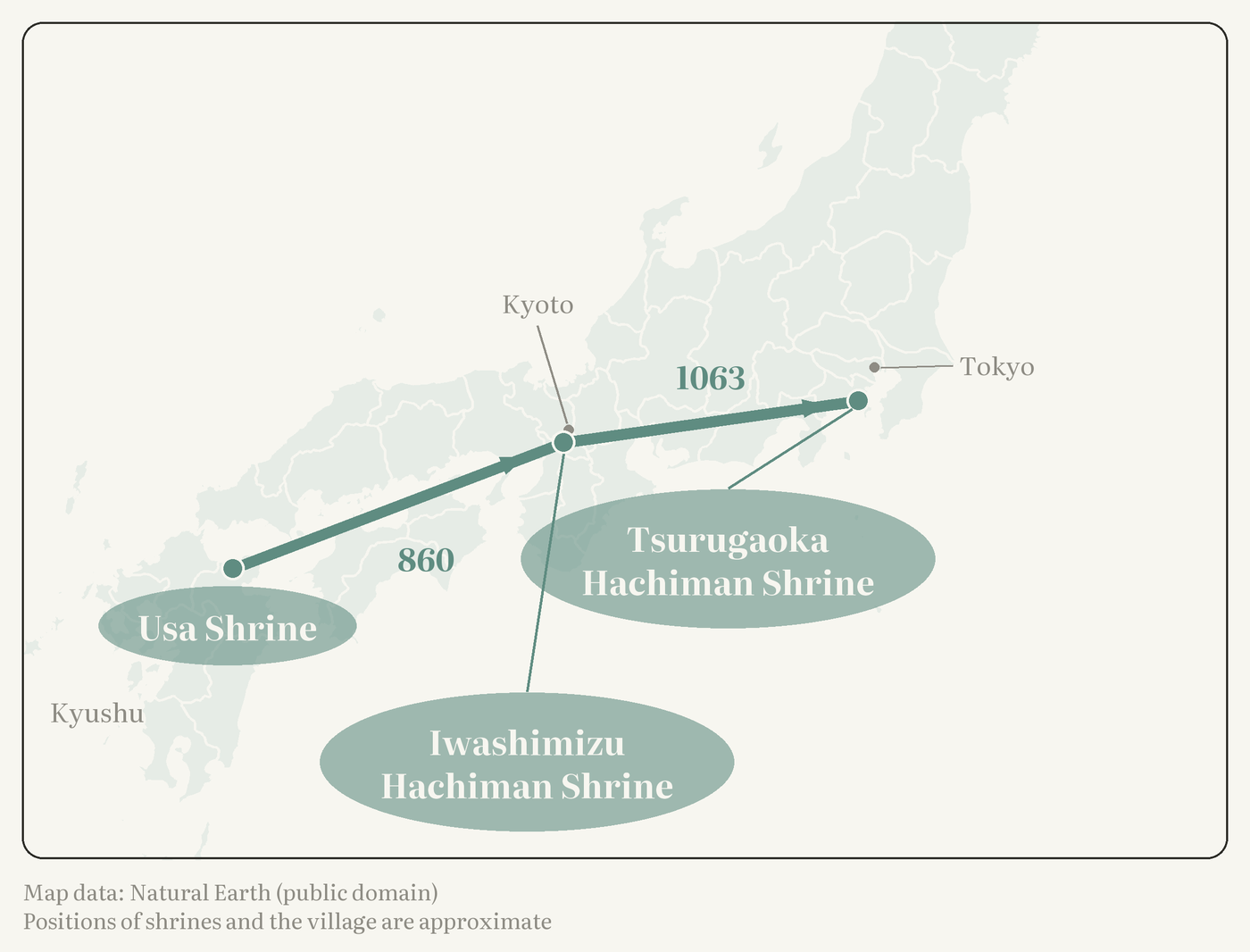
Why the tomoe for Hachiman? The books explain it in two ways
One explanation is fashion: shrines built in the tomoe's heyday took it as decoration, which later came to be read as the god's crest. The other is the archer's tool: the name comes from a picture of the tomo, a leather guard worn on the wrist when drawing a bow, and the god of archery was said to have been born with an arm as if a tomo were wrapped around it.
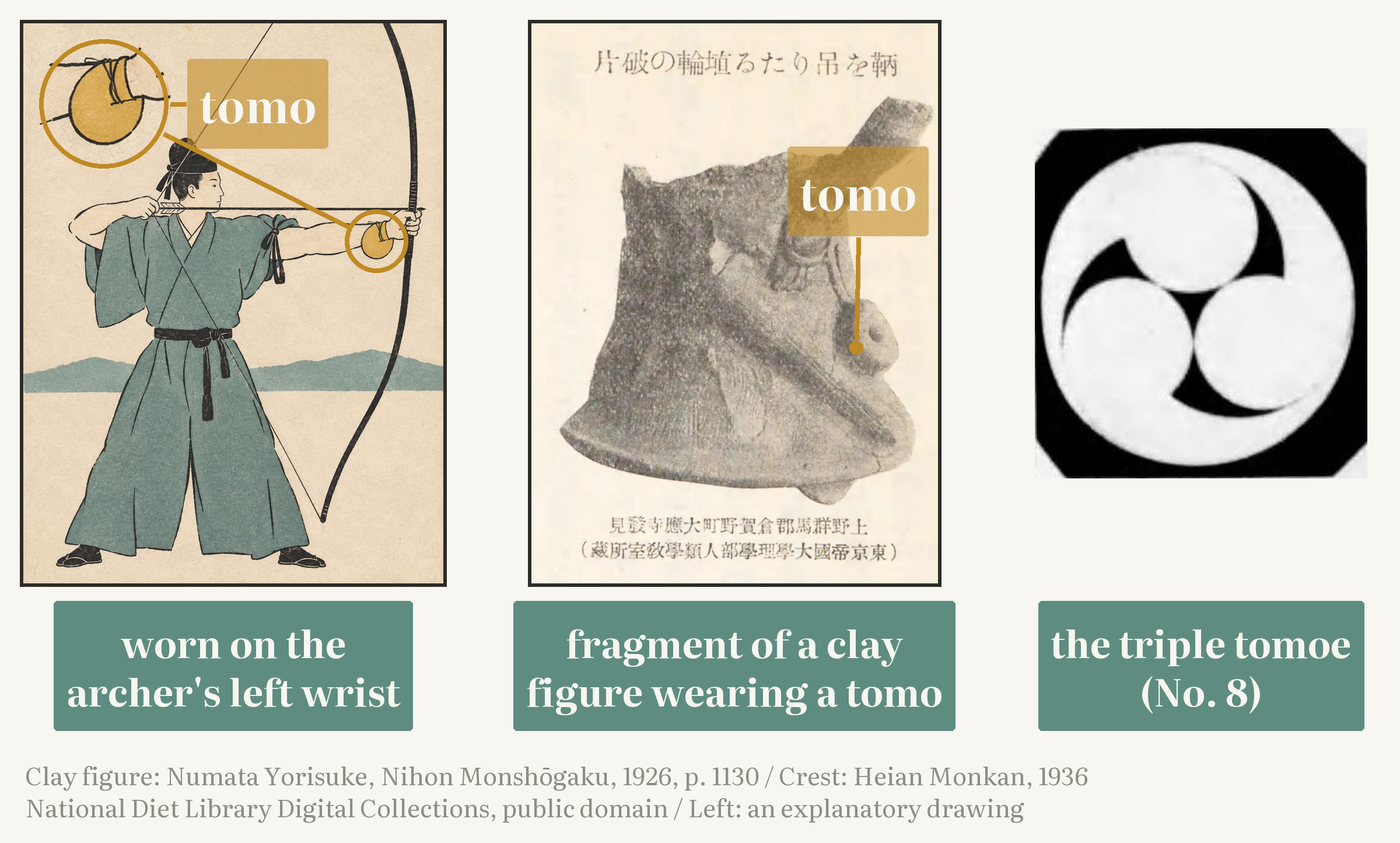
Warriors who believed in Hachiman make it their family crest
Warrior families of the northern Kanto Plain who revered Hachiman made the tomoe their family crest and asked for the god's help. The families that branched off from them and the families that followed them used it too, and the tomoe is still most common in that region today.
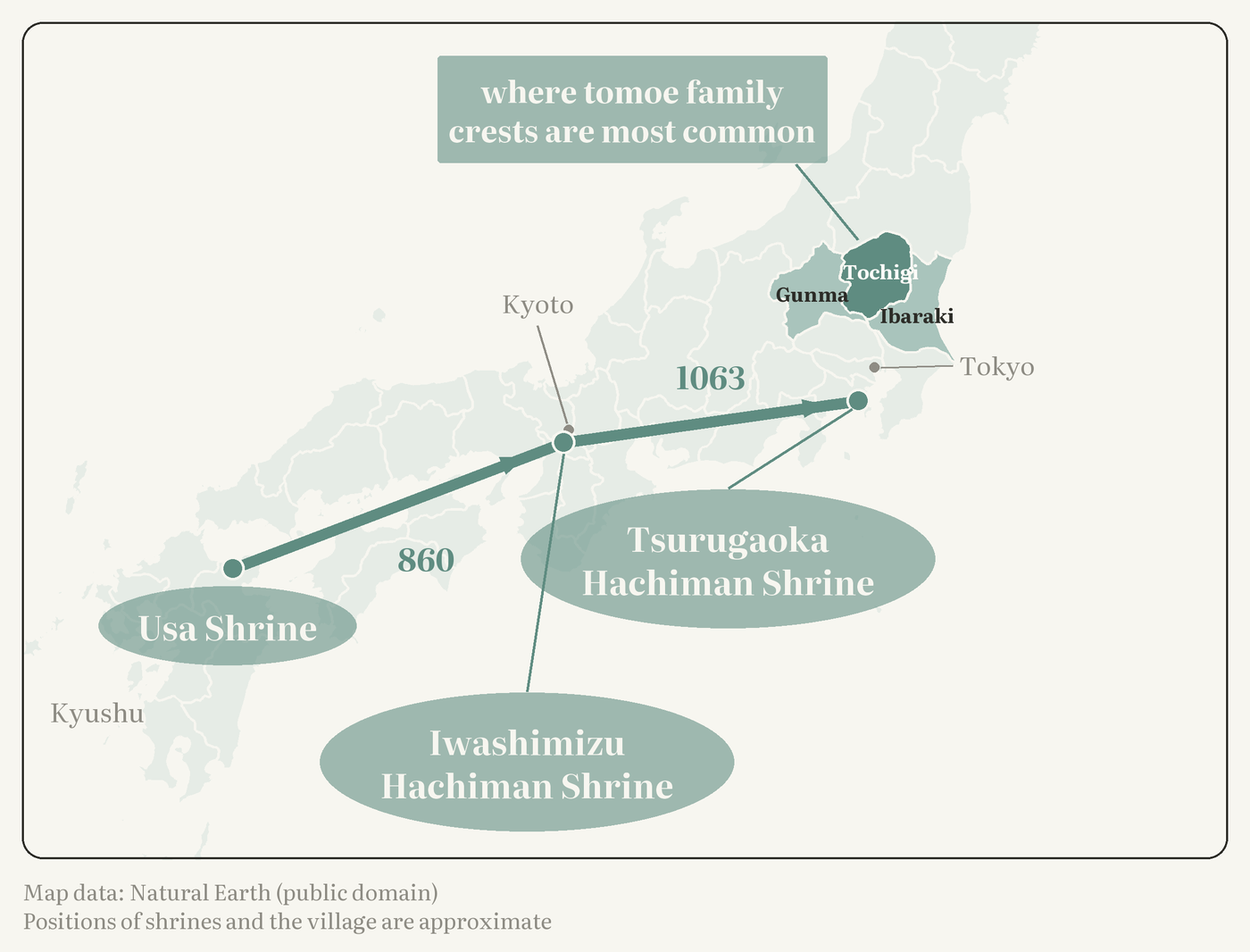
It spreads to shrines that are not Hachiman's
Hoping to share in Hachiman's power, shrines of other gods also put the tomoe on their buildings, and the older tomoe keep a small head and a long tail. That is how the tomoe went from being Hachiman's crest to being the mark of the shrine itself, and the three in ten is the result.
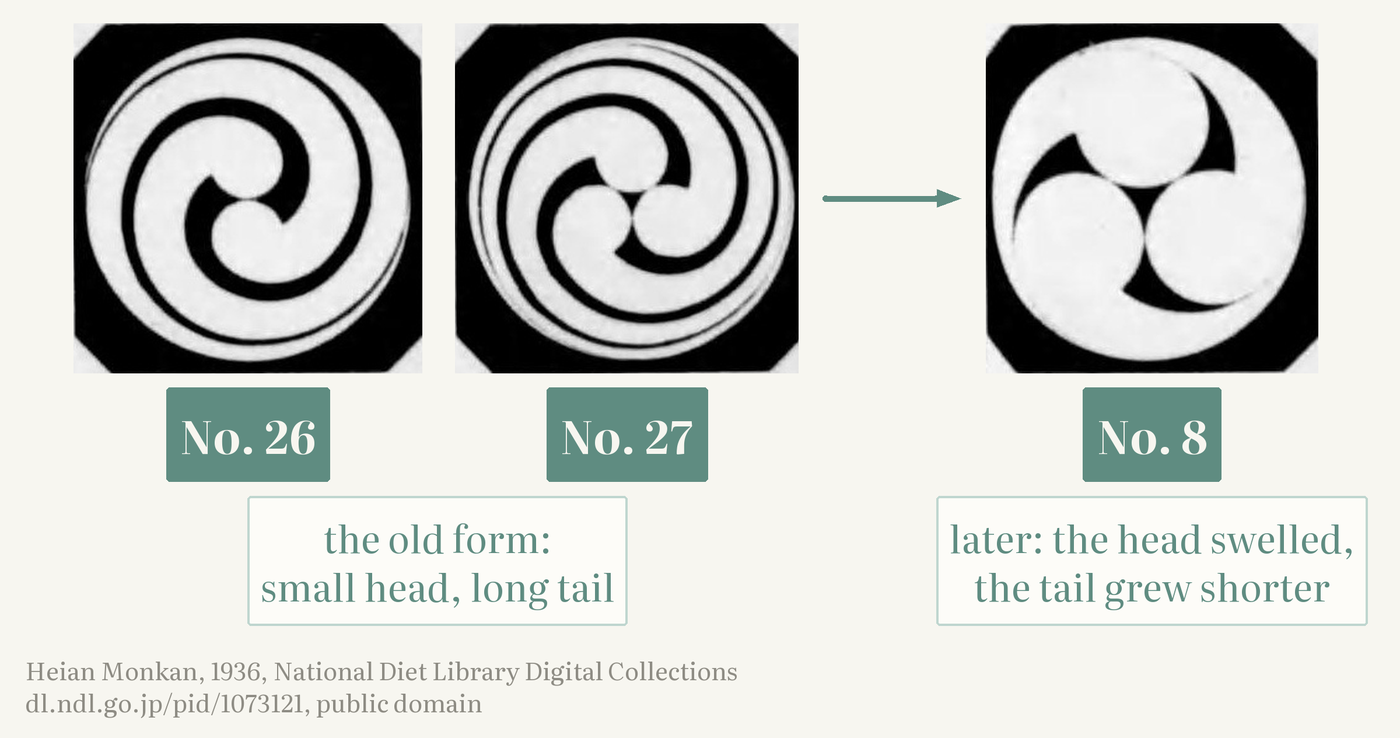
In the 16th century, a great army is said to have stopped at a village shrine where banners with the triple tomoe were flying, because attacking Hachiman's shrine would bring the god's punishment. The tomoe was a crest on which warriors placed their prayers, and at the same time a crest that stopped them.
How I researched this
The three in ten comes from a survey of the major shrines made 50 years ago. No single book answered why Hachiman has the tomoe, so I set four books side by side without making them into one answer, and I left the question of left and right for another article.
Crests in this article
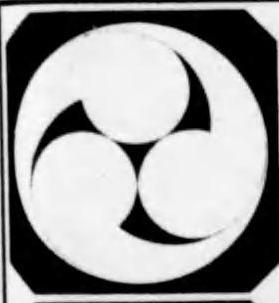
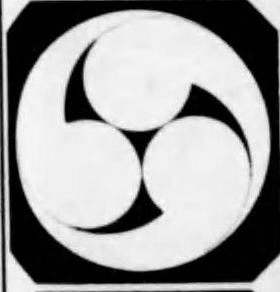

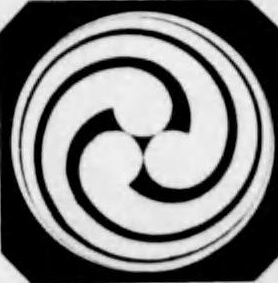
All crests: Heian Monkan (1936), pp. 30–31. National Diet Library Digital Collections, pid 1073121, public domain. Numbers are the catalog's own. · holder's page